
Welcome Guest, Not a member yet? Create Account  


Forum Statistics

14 Members,   3,536 Topics,   10,207 Replies,   Latest Member is Stanley


  The Life and Lies of Jimmy Savile (2014)
Posted by: Simon - 12-14-2025, 04:50 PM - Replies (1)


Dan Davies has spent more than a decade on a quest to find the real Jimmy Savile, and interviewed him extensively over a period of seven years before his death. In the course of his quest, he spent days and nights at a time quizzing Savile at his homes in Leeds and Scarborough, lunched with him at venues ranging from humble transport cafes to the Athenaeum club in London and, most memorably, joined him for a short cruise aboard the QE2.
Dan thought his quest had come to an end in October 2011 when Savile's golden coffin was lowered into a grave dug at a 45-degree angle in a Scarborough cemetery. He was wrong. In the last two and a half years, Dan has been interviewing scores of people, many of them unobtainable while Jimmy was alive. What he has discovered was that his instincts were right all along and behind the mask lay a hideous truth. Jimmy Savile was not only complex, damaged and controlling, but cynical, calculating and predatory. He revelled in his status as a Pied Piper of youth and used his power to abuse the vulnerable and underage, all the while covering his tracks by moving into the innermost circles of the establishment. 

Quote: Across 60 chapters, and over 600 pages, Dan Davies attempts to reveal the real Jimmy Savile. Savile was ubiquitous to those who grew up in the UK during the 60s, 70s and 80s, through his successful TV shows, charity fund raising, TV adverts, and relationships with senior establishment figures. Since his death in 2011 he was also been revealed as Britain’s most notorious and prolific sex offender of all time. This book gets to the heart of how he was able to operate with impunity and avoid prosecution.

Born into poverty in Leeds in 1926, Jimmy Savile rose to become a knight of the realm, and a confidant of Margaret Thatcher, Princess Diana, and the Prince of Wales. Along the way, he invented the concept of the club DJ, gave the BBC two of its most iconic shows (Top of the Pops and Jim’ll Fix It) and pioneered the celebrity as charity worker and fund raiser. These achievements alone make for a fascinating read, however it is Savile’s prolific and serial abuse of young and frequently vulnerable people that beggars belief. Clearly what helped Savile to operate “In Plain Sight” was his celebrity status. It is easy to forget just how popular he was during the 1970s - and to a lesser extent in the decades before and after. Unlike many reviewers, I never remember thinking Savile was dodgy or creepy. A bit weird perhaps, but not in a dangerous way. I grew up with him on “Top of the Pops” - which he pretty much invented, and of course “Jim’ll Fix It”, a Saturday night staple on BBC1 along with The Generation Game. I can well imagine being 12, 13 or 14 and being in awe of him and also trusting him - as did so many young people who encountered him. He was well practiced in grooming kids, and when necessary their parents too.

In addition to being a huge celebrity he also cultivated relationships at all levels of British society which included members of the Royal family, and Margaret Thatcher when she was Prime Minister. He was also given the run of three hospitals and was able to lure children to his car, flats, caravans etc. No wonder he considered himself untouchable and, despite many a close call, and even dropping heavy hints in interviews, he got away with abuse on a horrendous scale.

One of the most harrowing parts is the testimony, quoted verbatim, of a 12 year girl he raped whilst she was in hospital. This account powerfully brings home the monstrous nature of this type of abuse. The girl tried to get the nurses and a doctor to believe her account. The inference is that staff at Stoke Mandeville were well aware of what Savile was up to, even advising children to pretend to be asleep if he came round at night.

Savile was too canny to ever give much away over numerous interviews despite, in hindsight, some obvious clues. Sadly it was only after he had died that his victims were taken seriously and the substance of the old, dark rumours were finally heard. Savile always insisted that his great secret was that he had no secrets. Nothing could have been further from the truth - there were numerous people and establishments (BBC, the Police, doctors, nurses, friends etc.) whose complacency, corruption and complicity allowed him to systematically ruin hundreds of lives. This makes 'In Plain Sight: The Life and Lies of Jimmy Savile' a compulsive and deeply disturbing read, and one that avoids any sensationalism. Depressing, distressing and essential.

Continue reading..

  The Counterfeiters (1925)
Posted by: Simon - 12-14-2025, 04:43 PM - Replies (1)


The book begins with a schoolboy, Bernard, who leaves home. For the first night he shares a bed with his school friend Olivier. Olivier's uncle Edouard (a writer of mainly benevolent character) is greatly taken with his nephew and the feeling is reciprocated. But when Bernard is invited by Edouard for a holiday in the Alps, Olivier becomes jealous of Bernard and goes off for a trip with Passavant (another writer, but a bad character) instead. Many other boys come into the story: Georges, Olivier's younger brother, with whom Edouard is also involved; Vincent, Olivier's older brother, who is connected more with Passavant; Boris, at school with Georges; Phiphi, also at school with Georges; Ghéri, another schoolmate of Georges; Caloub, Bernard's younger brother; Dhurmer and Bercail, schoolmates of Olivier - to name a few. After much drama Olivier and Edouard do finally get together. But the novel ends with Edouard's words "I feel very curious to know Caloub." 

Quote: In André Gide’s great Modernist novel The Counterfeiters (Les Faux-monnayeurs, 1926), the schoolboy Boris, at the age of nine, comes under the influence of a boy called Baptistin, a year or two older, with whom he enjoys certain ‘clandestine practices’ - mutual masturbation - which they both, understandably, consider to be magical. Although Boris cures himself of this ‘vice’ for a while, he later takes it up again, masturbating alone, essentially as a consequence of being bullied. His sexual pleasure (volupté) is all the more intense for the recidivism it involves (‘mais il prenait plaisir à se perdre et faisait, de cette perdition même, sa volupté’). Gide himself had been removed from school at the tender age of eight because of certain ‘bad habits’ which he made no attempt to cover up, being naïvely unaware that there was any need to do so. Prior to this, he and the son of the concierge had been in the habit of masturbating - not each other but themselves in each other’s close company - underneath his parents’ dining table.
No book so intensely redolent of the frenzy of male puberty could well avoid mention — or implication, at least — of masturbation. But there is more to the raising of this topic than the dully mirroring requirements of realist plausibility. The whole of The Counterfeiters is vibrant with onanistic promise. Its complex of intrigues and affairs between adolescent boys thrives upon the purposive conjunction of hands and penises. The motivation for this is not just Gide’s indulgence of a personal interest - although that is likely to be a part of the matter. Given that the novel is so profoundly and extensively concerned with education and socialisation, masturbation takes its place in a thematic whole as the definitive exercise in sexual self- or co-education. It constitutes the boys’ best way of establishing a firm (and pleasurable) mode of relation to the physical world. This is no incidental detail in Gide’s broader, intellectual explorations of criminality and liminality: for the perception of physical matter is, as it always has been, sited near the base of all metaphysics.

Continue reading..

  The Burden of Sparrows (2024)
Posted by: Simon - 12-14-2025, 04:38 PM - Replies (1)


In the tranquil wilderness of Northern Michigan, school custodian Buddy Robertson finds all that he needs: the rhythms of nature, the unpretentious companionship of Mags and their seven cats, solitude from others — and a safe escape from the loss and abuse of his childhood.

During cold months, Buddy fusses with his collections of various treasures. Winter's end brings maple syrup production, and spring elicits the return of migratory birds. Buddy knows their calls. He eagerly anticipates the forest’s awakening in spring, the magic of summer, and the glory of autumn.

His appreciation for these pleasures comes from his grandfather and his first love, Leah. Both are gone, but Buddy can depend on the change of seasons, the golden light of dusk, and the gossip of red-winged blackbirds in April.

Buddy would love to keep his quiet existence. But when he comes face-to-face with Ben, a young boy courageously grappling with his own demons, Buddy is inspired to finally deal with his past.

In The Burden of Sparrows, author Debra Payne crafts an intimate portrait of one man's journey to overcome trauma and shame. In the embrace of nature and newfound connections, Buddy discovers love, courage, and human resilience.

Continue reading..

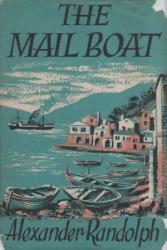
  The Mail Boat (1954)
Posted by: Simon - 12-14-2025, 04:33 PM - Replies (1)


Quote: MARTHA: . . . I know nothing about this sort of thing, that’s the whole trouble. I never knew one of these people before coming to Rome. I knew about them, but not even that, really, no—but believe me, Oscar is not one of those people, he simply isn’t, I can’t believe it. The ones I knew in Rome were not at all like him. In the first place, he is not effeminate. He is lean and hard, not muscular exactly, but he is firm. And he is wonderfully sure and deliberate in his movements. It is marvelous to see him walk, specially in dangerous places. I feel always so secure with him, so protected. Besides, I don’t have to tell you why he isn’t. Of course he isn’t! But then what is this story? Tell me. Is it just a fad? Some new and strange experience he wants to have? Then let’s get it over with, I say it again. He couldn’t possibly continue afterward, I don’t think. 


OSCAR: But the fact remains that the word is out. You see—it concerns a rather unusual friendship I have with a boy of thirteen. Please don’t squirm in your seat: it is not what you think—it is almost nothing, in fact, which is why I so much prefer that you should learn it from me, rather than from someone else, as eventually you undoubtedly would: you know how such rumors spread. It is the one accusation that is always believed, from which no person is safe. 


OSCAR: There was almost nothing at first. I had noticed the boy last year, and though we never talked, except the very last day, the very last hour, which is when I told him, too, that I would be back this summer, I had entertained for him a friendly and curious feeling. Which is why I wrote to him later, during the winter, and why there grew between us a strange and increasingly “sympathetic” correspondence. It turned out that he had noticed me no less than I had noticed him—which, when I think of it, he could have hardly helped, since I held him constantly under my eye. Such is his beauty. It alone would make me stop. It is unique: if you saw him but once you would understand. So he was aware, of course, of attention, annoyed by it too, perhaps (but I don’t think so, on second thought: I often observed him when he played with his friends, apparently intent on the game, but suddenly he would glance my way and search for me, almost anxiously, whenever I moved from my post; at other times, passing close to where I stood, he would affect that he did not see me, but then he revealed himself by a change in his movements, an almost imperceptible raise [as though to say: I’m quite at my ease] and by a certain rowdiness which he otherwise never displayed; or else, when he was alone, he passed by very quickly, without looking at me—but I would see him smile . . .). However he was not aware of the cause, of that I am certain; his beauty went quite unnoticed: it is what makes it unique and what allowed it to blossom. Like a beautiful bird or like a platinum fox in a forest. He was unaware . . . until I told him about it, until I embarked, was forced to embark, on this road of folly—but more about this later.

Quote: Told through a series of twenty-four letters, The Mail Boat is the story of Martha Baker and Oscar Tower's meeting in Rome at a bar catering to artistic people (read gay) on the Via Babuino, their relationship, and their subsequent time together on a tiny Tyrrhenian island where Oscar plans to work on his next novel. The mail boat that stops twice a week at the island anchors the activities of daily life.

Oscar corresponds with his friend Andrew (André) MaCloy, initially in Paris and later in Venice. Martha writes to her mother, Olga Baker and Janet Picard, a friend in New York, as well as Thomas Purdon, a former love interest and a professor at Yale. The recipient of the letter seems to determine the level of candor about the happenings on the island and Martha and Oscar's relationship.

Martha is deeply in love with Oscar and certainly has plans for their future. Oscar is much cooler and more casual about the relationship. He enjoys spending time with Martha but tends to ignore Martha when she suggests a more committed situation. Oscar is also distracted by a 13-year-old boy named Mario, the most beautiful of the local boys, with whom he would much rather spend his time. Martha is incensed at being ignored in favor of this street kid but also knows Oscar isn't really that way because he isn't effeminate at all. While Oscar won't admit it, even to himself, Martha is very clear in her understanding of Oscar's relationship with Mario, even going as far as telling Thomas in her letter that if Oscar would "just do something with the boy...it would be over in no time at all." (p.87)

Oscar's nature, although seemingly invisible to himself, is made clear by the author when friends visit from America, a literary agent and his 'esthetic' boy friend who plays tennis. In Martha's letter describing the visit and the dinner, she says, "They argued about a French poet who sounds like rainbow," (p.76) clearly a reference to Rimbaud. Later in passing, she also mentions that Oscar was wearing a black turtleneck sweater, which belonged to Martha.

Randolph is a bit coy in describing the island as Tyrrhenian. About half way through the book, when Martha is describing the day she and Oscar went to see the lighthouse, the description, while not a perfect match, comes very close to describing the Punta Carena Lighthouse on Capri. Given the long history of gay artists and authors on Capri and their relationships with the teenage locals, it seems fitting that Randolph would suggest this location.

Continue reading..

  Canto Contigo (2024)
Posted by: Simon - 12-14-2025, 04:30 PM - Replies (1)


When a Mariachi star transfers schools, he expects to be handed his new group's lead vocalist spot―what he gets instead is a tenacious current lead with a very familiar, very kissable face.

In a twenty-four-hour span, Rafael Alvarez led North Amistad High School’s Mariachi Alma de la Frontera to their eleventh consecutive first-place win in the Mariachi Extravaganza de Nacional; and met, made out with, and almost hooked up with one of the cutest guys he’s ever met. 
Now eight months later, Rafie’s ready for one final win. What he didn’t plan for is his family moving to San Antonio before his senior year, forcing him to leave behind his group while dealing with the loss of the most important person in his life―his beloved abuelo. Another hitch in his plan: The Selena Quintanilla-Perez Academy’s Mariachi Todos Colores already has a lead vocalist, Rey Chavez―the boy Rafie made out with―who now stands between him winning and being the great Mariachi Rafie's abuelo always believed him to be. Despite their newfound rivalry for center stage, Rafie can’t squash his feelings for Rey. Now he must decide between the people he’s known his entire life or the one just starting to get to know the real him. 
Canto Contigo is a love letter to Mexican culture, family and legacy, the people who shape us, and allowing ourselves to forge our own path. At its heart, this is one of the most glorious rivals-to-lovers romance about finding the one who challenges you in the most extraordinary ways.

Reviews
"A queer love letter to mariachi music and culture." 
- Kirkus , Starred Review 

"In their third teen romance, Garza Villa orchestrates another masterpiece about queer youth redefining traditional customs in Texas." 
- Booklist , Starred Review 

"Positing that love and joy are life’s greatest experiences, Garza Villa ( Ander & Santi Were Here) crafts an earnest story that is both a quiet exploration of grief and a fierce rivals-to-lovers romance that centers the intensity and importance of passion." 
- Publishers Weekly

"Garza Villa offers another heartfelt queer romantic drama here...Rich in cultural detail and linguistic authenticity." 
- The Bulletin of the Center for Children’s Books 

"With song and snark, Jonny Garza Villa has captured my heart yet again! Never have I rooted for two rivals more than with Rafie and Rey. This exploration of family, mariachi, and the difference between reputation versus expectation will stay with me for a long time." 
― Jason June, New York Times bestselling author of Out of the Blue

"Like Rafie and Rey when they first meet, this book swept me away from the very beginning. Jonny Garza Villa vibrantly blends mariachi, magical realism, first love and grief into a story about the ways that taking time to mourn is essential to being true to ourselves in life. Also: someone please make this book into a movie asap because I need to hear these songs performed the way only Rafie and Rey could." 
― Natalia Sylvester, Pura Belpré and Schneider honor-winning author of Breathe and Count Back from Ten

“ Canto Contigo ’s explorations of first love, fresh grief, and the pressures behind building legacy sing together in perfect harmony. Another heartfelt, humorous, and healing story from Jonny Garza Villa that is guaranteed to stick in readers’ heads like their new favorite song.” -Racquel Marie, author of Ophelia After All 
"Canto Contigo seamlessly blends love and hate, longing and grief, into the perfect anthem of young love that'll leave you begging for an encore. Jonny Garza Villa's done it again (make me cry)!" 
― Emery Lee, author of Café con Lychee

Continue reading..

Online Users
There is currently 1 user online 0 Member(s) | 1 Guest(s)

Welcome, Guest
You have to register before you can post on our site.

Username
  

Password


Search Forums

(Advanced Search)