Welcome Guest, Not a member yet? Create Account  


Forum Statistics

14 Members,   3,536 Topics,   10,207 Replies,   Latest Member is Stanley


  Gunner's Diary (1943)
Posted by: Frenuyum - 12-03-2025, 02:35 PM - Replies (1)


Goodreads says nothing at all about this, but the title is self-explanatory

Friend joined up in 1942 and recorded his experiences both in art and writing.

Towards the end of the Second World War there was pressure to commission a greater variety of artists for the official war art scheme. Friend was recommended by Sydney Ure Smith, who had published Gunner's Diary, and Louis McCubbin, Director of the Art Gallery of South Australia, who was advisor to the Memorial's art committee.

Friend was commissioned in 1945, working with the Royal Australian Air Force in Labuan and the 7th Division AIF in Borneo. He later worked in Balikpapan, but his plans to stay in the Pacific to record the surrender of the Japanese and the liberation of allied POWs were cancelled when he had to return to Australia with a severe tropical rash on his hands.

Continue reading..

  Donald Friend (1965)
Posted by: Frenuyum - 12-03-2025, 02:32 PM - Replies (1)


Donald Friend’s verve and élan have contributed to Australian painting. He has given us much that is excellent with a sense of true refinement.in an environ where mediocrity and false earnestness often prevail. Compared to his English counter-parts of the romantic ’forties—Vaughan, Craxton, Minton and Ayrton, to mention only a few, I do not think it is extravagant to say Friend is draughtsman of high rank. I think he has given us much that will be enduring. 


Quote: Robert Studley Forrest Hughes, AO was an Australian art critic, writer and television documentary maker who has resided in New York since 1970. He was educated at St Ignatius' College, Riverview before going on to study arts and then architecture at the University of Sydney. At university, Hughes associated with the Sydney "Push" – a group of artists, writers, intellectuals and drinkers. Among the group were Germaine Greer and Clive James. Hughes, an aspiring artist and poet, abandoned his university endeavours to become first a cartoonist and then an art critic for the Sydney periodical The Observer, edited by Donald Horne. Around this time he wrote a history of Australian painting, titled The Art of Australia, which is still considered to be an important work. It was published in 1966. Hughes was also briefly involved in the original Sydney version of Oz magazine, and wrote art criticism for The Nation and The Sunday Mirror.


Hughes left Australia for Europe in 1964, living for a time in Italy before settling in London, England (1965) where he wrote for The Spectator, The Daily Telegraph, The Times and The Observer, among others, and contributed to the London version of Oz. In 1970 he obtained the position of art critic for TIME magazine and he moved to New York. He quickly established himself in the United States as an influential art critic.In 1975, he and Don Brady provided the narration for the film Protected, a documentary showing what life was like for Indigenous Australians on Palm Island.

In 1980, the BBC broadcast The Shock of the New, Hughes's television series on the development of modern art since the Impressionists. It was accompanied by a book of the same name; its combination of insight, wit and accessibility are still widely praised. In 1987, The Fatal Shore, Hughes's study of the British penal colonies and early European settlement of Australia, became an international best-seller.

Hughes provided commentary on the work of artist Robert Crumb in parts of the 1994 film Crumb, calling Crumb "the American Breughel". His 1997 television series American Visions reviewed the history of American art since the Revolution. He was again dismissive of much recent art; this time, sculptor Jeff Koons was subjected to criticism. Australia: Beyond the Fatal Shore (2000) was a series musing on modern Australia and Hughes's relationship with it. Hughes's 2002 documentary on the painter Francisco Goya, Goya: Crazy Like a Genius, was broadcast on the first night of the BBC's domestic digital service. Hughes created a one hour update to The Shock of the New. Titled The New Shock of the New, the program aired first in 2004. Hughes published the first volume of his memoirs, Things I Didn’t Know, in 2006.

Continue reading..

  Frits - Costa Brava (1960)
Posted by: Frenuyum - 12-03-2025, 02:29 PM - Replies (1)


It is July 1936 and the Spanish Civil War is breaking out. Santiago Capmany, a Venezuelan film producer on holiday in a village in Catalonia, is sitting on a seaside bench. Suddenly he is approached for help by a desperate Juan José, a boy on the eve of his 13th birthday whose father, a rightist politician, has just been killed. Juan José is instinctively drawn to put himself in Santiago's hands and love him, as is Santiago to reciprocate, thus initiating their dramatic escape together from the war-torn country.  

   
It is July 1936 and the Spanish Civil War is breaking out. Santiago Capmany, a Venezuelan film producer on holiday in a village in Catalonia, is sitting on a seaside bench. Suddenly he is approached for help by a desperate Juan José, a boy on the eve of his 13th birthday whose father, a rightist politician, has just been killed. Juan José is instinctively drawn to put himself in Santiago's hands and love him, as is Santiago to reciprocate, thus initiating their dramatic escape together from the war-torn country.

Though the boy and man express their movingly depicted love with physical affection and the boy's physical attractiveness is described several times, it would be entirely possible to believe neither had any interest in a sexual fulfillment of it if it were not for the last three pages. Only then reencountering a now adult Juan José years too late, does Santiago gently reveal it is physical attraction "given to us by nature" which drives "we few ... to offer help and support to boys of a certain age." Juan José delicately reveals in turn that he would have welcomed consummation and had ever since been tormented with regret over having missed this fulfillment before it was too late.

A rather melodramatic fairy-tale quality pervades the dialogue and action of this enjoyable novella. Sometimes this strains its credibility, but fortunately never quite to breaking-point. The emotions described are absolutely authentic. These emotions are rarely described or understood today, and herein lies Costa Brava's true value.

Continue reading..

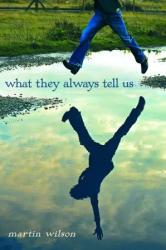
  What They Always Tell Us (2008)
Posted by: Frenuyum - 12-03-2025, 02:24 PM - Replies (1)


JAMES AND ALEX have barely anything in common anymore—least of all their experiences in high school, where James is a popular senior and Alex is suddenly an outcast. But at home, there is Henry, the precocious 10-year-old across the street, who eagerly befriends them both. And when Alex takes up running, there is James’s friend Nathen, who unites the brothers in moving and unexpected ways 

Quote: This book had been on my radar for quite a while—it was a Lambda Literary Award nominee in 2008 for Young Adult/Children’s Fiction—but I never got around to reading it. However, as I noted in my review of I’ll Get There. It Better Be Worth The Trip, there were three essays at the end, one of which was written by Martin Wilson. That spurred me on to picking up What They Always Tell Us and I am glad I finally did.

As I suspect everyone who reads my reviews knows, young adult books are my guilty pleasure. I am always very happy when I find a new one that I can add to my permanent collection. What They Always Tell Us is definitely on that list.

The writing style is unique, unusual, and works very well for the story. It is written in the present tense, third person POV and alternates between Alex and James in each chapter. I read one review that suggested the POV and present tense were done to provide some distance; I felt the opposite—I was completely pulled into the story.

The story opens with an Alex chapter. It’s November and he’s at home alone and being a bit of a rebel: wearing his father’s ratty bathrobe and eating his cheeseburger and fries dinner off his mother’s best china—and not washing the dishes afterwards. LOL. This is what passes for rebellious for upper middle class kids in Tuscaloosa, Alabama! Alex is by himself because his parents are at a wedding in Nashville. His brother James, who was supposed to be his chaperone for the weekend is off at the La Quinta motel, having a (supposedly) grand old time with his current girlfriend, leaving Alex at home to fend for himself.

As we get to know Alex in that first chapter, we learn that he drank a bottle of Pine-Sol at a back-to-school party right after Labor Day. Was it a conscious suicide attempt or just an impulsive, stupid mistake? At the beginning of the book, it’s clear that Alex doesn’t know—coming to terms with what he did, and why, is a major theme of the story. How it’s handled though, is wonderful, and really shows the healing power of love.

I can hear the groans now. “Another gay suicide book?” Well, yes and no. Yes because there a suicide theme but no because Alex didn’t drink the Pine-Sol because of being gay, it was more just general all-purpose adolescent angst.

Within James’ chapters, there’s also a healthy dose of adolescent angst which I wasn’t expecting. After all, James is popular, smart, and athletic, with a steady stream of girlfriends and a posse of good friends. He set the family standard which is partly why Alex is having such a miserable time. How can he possibly compete with his brother who has it all? The thing is, James doesn’t have it all and comes to realize this—and in the process, learns a great deal about himself, his brother, and their relationship.

I didn’t like James at first. It’s a measure of how effectively he’s written that I was rooting for him at the end, just as much as I was rooting for Alex. And Alex, lost soul at the beginning, does get it together and emerges as a whole, healed, and happy person and even gets to experience the wonder of his first love—something that, sadly, still eludes James by the end of the book.

All in all, I really loved this story. It was unique and different, but grounded in the reality of adolescent life. There was ambiguity, which is good for a reader’s imagination, but enough closure that the book didn’t feel open-ended or incomplete. All of the characters, from the most minor bit players who barely have any time on page to the leading quartet of Alex, James, Henry, and Nathen are beautifully written and fully realized. And Nathen? I haven’t said anything about him in this review but I dare anyone who reads this book not to fall madly in love with him. You’ve been warned. :-)

Continue reading..

  We Now Return to Regular Life (2017)
Posted by: Frenuyum - 12-03-2025, 02:17 PM - Replies (1)


A ripped-from-the-headlines novel that explores the power of being an ally—and a friend—when a kidnapped boy returns to his hometown.

Sam Walsh had been missing for three years. His older sister, Beth, thought he was dead. His childhood friend Josh thought it was all his fault. They were the last two people to see him alive.

Until now. Because Sam has been found, and he’s coming home. Beth desperately wants to understand what happened to her brother, but her family refuses to talk about it—even though Sam is clearly still affected by the abuse he faced at the hands of his captor.

And as Sam starts to confide in Josh about his past, Josh can’t admit the truths he’s hidden deep within himself: that he’s gay, and developing feelings for Sam. And, even bigger: that he never told the police everything he saw the day Sam disappeared.

As Beth and Josh struggle with their own issues, their friends and neighbors slowly turn on Sam, until one night when everything explodes. Beth can’t live in silence. Josh can’t live with his secrets. And Sam can’t continue on until the whole truth of what happened to him is out in the open.

For fans of thought-provoking stories like The Face on the Milk Carton, this is a book about learning to be an ally—even when the community around you doesn’t want you to be.

Continue reading..

Online Users
There are currently 3 online users. 0 Member(s) | 3 Guest(s)

Welcome, Guest
You have to register before you can post on our site.

Username
  

Password


Search Forums

(Advanced Search)