
Welcome Guest, Not a member yet? Create Account  


Forum Statistics

14 Members,   3,536 Topics,   10,207 Replies,   Latest Member is Stanley


  Teenagers in Love Before Girl-Craziness (2007)
Posted by: Simon - 12-19-2025, 03:52 PM - Replies (1)


Teenage boys are wild about girls.When their hormones kick in at puberty, they can think of nothing else, and that's the way it has always been-- right? Wrong. Before World War II, only sissies liked girls. Masculine, red-blooded, all-American boys were supposed to ignore girls until they were 18 or 19. Instead, parents, teachers, psychiatrists, and especially the mass media encouraged them to form passionate, intense, romantic bonds with each other. This book explores romantic relationships between teenage boys as they were portrayed before, during, and immediately after World War II. The author takes the reader through a rich landscape of media -- sci fi pulps, comics, adventure stories, tales of teen sleuths, boys' serial novels, wartime bestsellers, and movies populated by many types of male adolescents: Boys Next Door, Adventure Boys, Jungle Boys, and Lost Boys. In Hollywood movies, Boys Next Door like Jackie Cooper, Ronald Sinclair, and Jimmy Lydon were constantly falling in love, but not with girls. In serial novels, Jungle Boys like Bomba, Sorak, and Og Son of Fire swung through the trees to rescue teenage boys, not teenage girls. In comic strips and on the radio, Adventure Boys like Don Study, Jack Armstrong, and Tim Tyler formed lasting romantic partnerships with other boys or men. Lost Boys like Frankie Darro, Leo Gorcey, and Billy Halop starred in dozens of movies about pairs of poor urban teenagers sticking together, with never a girl in sight.

Continue reading..

  Your Children All Gone (2012)
Posted by: Simon - 12-19-2025, 03:43 PM - Replies (1)


Even though this takes place in Germany I'm sticking it my 'true-grit' (aka fucked up white trash) shelf. I guess America doesn't have a monopoly on twisted Appalachia type folks, although there is an element of old-world charm here that is generally missing from my dentally impaired and radially excelled countrymen and women.

The book opens in the modern day. A guy returns to his hometown after years away to find it being overrun by yuppie types, but with some of his old friends still making up part of the local color. A girl he knew growing up has died and he and three of his friends are the only people who go to her funeral. The funeral ends, like any good funeral should, with one of the mourners lifting up her dress, showing everyone she isn't wearing any knickers and pissing on the grave. There is then a minor physical altercation. You'd almost think this was taking place in Ireland instead of Germany with these kinds of goings-ons.

The book then jumps back forty years or so to give a series of chapters that each tell a different story about the town and children growing up there. The chapters are told from the point of view of the different kids who would be taking part in this funeral, either as the mourners or as the stiff.

After the first couple of chapters you start to catch on to the idea that none of these stories are going to end well. Not that the kids are going to come to a bad end necessarily, but that something fucked up is going to happen to someone in each of the chapters.

The book straddles the line of being super-natural, but you never really know, and I think you get the feeling that there is nothing super-natural going on except that some backward ignorant types take some refuge in believing in ghosts and curses and things like that instead of facing up to the fact that the whole town is a bunch of borderline psychopaths. Just look at the matter of fact way that the Thanksgiving contest is told in one of the first chapters and the almost flippant way it's mentioned in some later stories.

The book is blurbed with nods to Shirley Jackson (which is a code word for "The Lottery", which is really the only Shirley Jackson story that anyone ever means when they say Shirley Jackson) and Stephen King's "Children of the Corn". The first allusion has some validity. The second is nonsense, but it goes well with the creepy kid on the cover of the book. These aren't stories of weird kids holding a town captive with the terroristic antics of scary pre-pubescents, it's a story of a fucked up town, just told from the perspective of a group of kids. If you had to relate this novel to a Stephen King work, "The Body" would probably be a better one, but without any of the heart-felt nostalgia (or maybe that is just in the movie, I've only read the story once, but seen the movie many times so my memory isn't necessarily good here).

Grumbling about the blurbs though is just about the only thing I can complain about for this book. For a two-hundred page book there is a high density of fucked up things going on, but it never felt like I was being hit over the head with shocking scenes over and over again, but now that I'm thinking of all the things that this book had in it I'm fairly amazed it was all able to fit into a satisfying short novel.

Continue reading..

  Heated Rivalry (2019)
Posted by: Simon - 12-19-2025, 03:29 PM - Replies (1)


Based on the series by New York Times bestselling author Rachel Reid, "Heated Rivalry" is now streaming on Crave in Canada and on HBO Max in the U.S. Apparently,its quite explicit. Discover all 6 books in the series!

“Sexy, hot, funny and sweet, Heated Rivalry is a game changer in sexy sports romance.” —All About Romance
Nothing interferes with Shane Hollander’s game—definitely not the sexy rival he loves to hate.

Pro hockey star Shane Hollander isn’t just crazy talented, he’s got a spotless reputation. Hockey is his life. Now that he’s captain of the Montreal Voyageurs, he won’t let anything jeopardize that, especially the sexy Russian whose hard body keeps him awake at night.
Boston Bears captain Ilya Rozanov is everything Shane’s not. The self-proclaimed king of the ice, he’s as cocky as he is talented. No one can beat him—except Shane. They’ve made a career on their legendary rivalry, but when the skates come off, the heat between them is undeniable. When Ilya realizes he wants more than a few secret hookups, he knows he must walk away. The risk is too great.
As their attraction intensifies, they struggle to keep their relationship out of the public eye. If the truth comes out, it could ruin them both. But when their need for each other rivals their ambition on the ice, secrecy is no longer an option.
Quote: Romance fiction has surged in popularity recently, thanks in part to dedicated BookTok and Instagram communities, and several subgenres have emerged – gone is the tame bodice ripping of your grandma’s Mills & Boon novels. Now it’s romantasy, paranormal romance, dystopian love and, perhaps the fastest-growing of them all, sports romance. And then there’s a sub-subgenre: queer sports romance.


To get even more specific, one sport above others has been the setting: the uber-macho world of ice hockey.


No, I don’t know why, either. But fans – interestingly, mostly young women – were outraged when Heated Rivalry was initially set for release only on Canadian streaming service Crave. Following much online chatter among fans about how they could watch the series – piracy, setting up VPNs – HBO Max picked it up at the 11th hour.


The first TV adaptation in the subgenre, Heated Rivalry is based on the steamy book of the same name by bestselling author Rachel Reid, from her Game Changers YA series. Although this series is decidedly more A(dult) than it is Y(oung).


Set in Canada, in Major League ice hockey (a fictionalised version of the National Hockey League), Heated Rivalry is the story of a secret years-long love affair between two closeted gay players – the wholesome Shane Hollander (Hudson Williams), who plays for the Montreal Metros, and Russian player Ilya Rozanov (Texan actor Connor Storrie, doing a reasonable accent), who has been drafted to the Boston Raiders – who are the “two most talked-about prospects in the world”.


The pair meet before they make it to the big league, in 2008, and we follow their careers as they work their way up, becoming rivals on the ice – badmouthing each other before matches, WWF-style – and then secret lovers off.


The series is set across eight years of their clandestine affair, but it’s only 13 minutes into episode one before they’re alone in the locker room showers and furtive glances lead to the first of several very graphic sex scenes.


Across years, hockey seasons, and even countries – they’re in Russia for the 2014 Sochi Olympics at one point – Ilya and Shane studiously avoid each other in public while sexting in private, using false names lest anybody stumble upon their text messages (although those dick pics are something of a giveaway).

Continue reading..

  Overview
Posted by: master - 12-18-2025, 04:16 PM - No Replies

All preliminary eBooks


rar formats
[Image: do.png]

Continue reading..

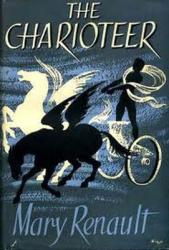
  The Charioteer (1953)
Posted by: WMASG - 12-18-2025, 03:46 PM - Replies (1)


After enduring an injury at Dunkirk during World War II, Laurie Odell is sent to a rural veterans’ hospital in England to convalesce. There he befriends the young, bright Andrew, a conscientious objector serving as an orderly. As they find solace and companionship together in the idyllic surroundings of the hospital, their friendship blooms into a discreet, chaste romance. Then one day, Ralph Lanyon, a mentor from Laurie’s schoolboy days, suddenly reappears in Laurie’s life, and draws him into a tight-knit social circle of world-weary gay men. Laurie is forced to choose between the sweet ideals of innocence and the distinct pleasures of experience.

Quote: Plato's Allegory of the Chariot

In the Phaedrus, Plato (through his mouthpiece, Socrates) shares the allegory of the chariot to explain the tripartite nature of the human soul or psyche.

The chariot is pulled by two winged horses, one mortal and the other immortal.

The mortal horse is deformed and obstinate. Plato describes the horse as a “crooked lumbering animal, put together anyhow…of a dark color [black], with grey eyes and blood-red complexion; the mate of insolence and pride, shag-eared and deaf, hardly yielding to whip and spur.”

The immortal horse, on the other hand, is noble and game, “upright and cleanly made…his color is white, and his eyes dark; he is a lover of honor and modesty and temperance, and the follower of true glory; he needs no touch of the whip, but is guided by word and admonition only.”

In the driver’s seat is the charioteer, tasked with reining in these disparate steeds, guiding and harnessing them to propel the vehicle with strength and efficiency. The charioteer’s destination? The ridge of heaven, beyond which he may behold the Forms: essences of things like Beauty, Wisdom, Courage, Justice, Goodness — everlasting Truth and absolute Knowledge. These essences nourish the horses’ wings, keeping the chariot in flight.

The charioteer joins a procession of gods, led by Zeus, on this trip into the heavens. Unlike human souls, the gods have two immortal horses to pull their chariots and are able to easily soar above. Mortals, on the other hand, have a much more turbulent ride. The white horse wishes to rise, but the dark horse attempts to pull the chariot back towards the earth. As the horses pull in opposing directions, and the charioteer attempts to get them into sync, his chariot bobs above the ridge of heaven then down again, and he catches glimpses of the great beyond before sinking once more.

If the charioteer is able to behold the Forms, he gets to go on another revolution around the heavens. But if he cannot successfully pilot the chariot, the horses’ wings wither from lack of nourishment, or break off when the horses collide and attack each other, or crash into the chariots of others. The chariot then plummets to earth, the horses lose their wings, and the soul becomes embodied in human flesh. The degree to which the soul falls, and the “rank” of the mortal being it must then be embodied in is based on the amount of Truth it beheld while in the heavens. Rather like the idea of reincarnation. The degree of the fall also determines how long it takes for the horses to regrow their wings and once again take flight. Basically, the more Truth the charioteer beheld on his journey, the shallower his fall, and the easier it is for him to get up and get going again. The regrowth of the wings is hastened by the mortal soul encountering people and experiences that contain touches of divinity, and recall to his memory the Truth he beheld in his preexistence. Plato describes such moments as looking “through the glass dimly” and they hasten the soul’s return to the heavens.

Continue reading..

Online Users
There are currently 3 online users. 0 Member(s) | 3 Guest(s)

Welcome, Guest
You have to register before you can post on our site.

Username
  

Password


Search Forums

(Advanced Search)