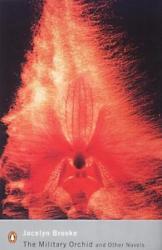
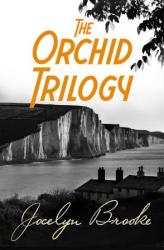
A disarming, lyrical hybrid of fiction and autobiography, this forgotten masterpiece of post-war English fiction follows a small boy through his First World War childhood and teenage years on the Kentish coast, then into the army and frontline service in the Second World War. Obsessed by his strange twin passions for orchids and for fireworks, the author-narrator paints a haunting portrait of a childhood and adulthood interleaved with one another in a near-mystical rural idyll. Defined by his unspoken homosexuality, the books capture the unfolding of a melancholy, often painfully sensitive male consciousness. First published in the late 1940s as three separate but interlinked volumes - "The Military Orchid" (1948); "A Mine of Serpents" (1949) and "The Goose Cathedral" (1950) - The Orchid Trilogy conjures up a rapturous, fantastical portrait of England at war and peace in the 20th century. Witty, subtle and deceptively simple, this unjustly neglected classic has yet to be surpassed in its exploration of the magical world of childhood. One of those too-rare books whose enjoyability makes it seem too short - Elizabeth Bowen
It is a kind of collage of sharply drawn bits of real life, excellently described and artistically arranged - Stephen Spender
Reminiscence and reflection and description are woven together to make a curious and fascinating tapestry - David Cecil
Mr. Brooke's finely shaped prose, his wit, percipience, and liveliness in the description of people, places, and states of mind are a rare delight - The Scotsman
A sad, funny, densely detailed yet continuously readable experience - The Observer
One of the most exciting creative artists of our time and one who will consistently evade all the literary categories - John Pudney
About the Author
Jocelyn Brooke was born in 1908 on the south coast and educated at Bedales and Worcester College, Oxford. He worked in London for a while, then in the family wine-merchants in Folkestone, Kent. In 1939, Brooke enlisted in the Royal Army Medical Corps, and reenlisted after the war as a Regular. The critical success of The
Military Orchid (1948), the first volume of his autobiographical Orchid trilogy, provided the opportunity to buy himself out, and he immediately settled down to write, publishing some fifteen titles between 1948 and 1955, including the successive volumes of the trilogy,
A Mine of Serpents (1949) and
The Goose Cathedral (1950). His other published work includes two volumes of poetry, the novels The Image of a Drawn Sword (1950) and The Dog at Clambercrown (1955), as well as some technical works on botany. A perceptive reviewer, Brooke wrote critiques of Aldous Huxley, Elizabeth Bowen, Ronald Firbank, and John Betjeman. He also introduced and edited the journals and published works of Denton Welch. Jocelyn Brooke died in 1966.
Review
He is as subtle as the devil - John Betjeman
One of those too-rare books whose enjoyability makes it seem too short. - Elizabeth Bowen
It is a kind of collage of sharply drawn bits of real life, excellently described and artistically arranged - Stephen Spender
One of the notable writers to have surfaced after the war - Anthony Powell
Quote: Bernard Jocelyn Brooke (30 November 1908 – 29 October 1966) was an English writer and naturalist. He wrote several unique, semi-autobiographical novels, as well as some poetry. His most famous works include the Orchid Trilogy—The Military Orchid (1948), A Mine of Serpents (1949), and The Goose Cathedral (1950)—and The Image of a Drawn Sword (1950).
Life and career
Brooke was born at Folkestone in Kent, the third child of a wine merchant, who with his wife was a Christian Scientist.[1] Sent initially to the King's School, Canterbury, Brooke was deeply unhappy there, and ran away twice. He then was moved to Bedales School before going up to Worcester College, Oxford, Brooke's childhood revolved mostly around his principal interests of amateur botany and fireworks, in the shadow of the First World War. "When the Second World War began he enlisted in the Royal Army Medical Corps (RAMC) and became one of the pox wallahs, those working to treat venereal disease. Brooke was decorated for bravery."
Elements of his experiences, and his love of the military life, appear in most of his subsequent works, to the extent that much of his fiction can be regarded as at least partly autobiographical.
Though the Orchid Trilogy strays into a typically English vein of humour, the idyllic land of his childhood and his obsession with le paradis perdu ('paradise lost') often bring in an element of intense melancholy, something developed in paranoia and isolation in The Image of a Drawn Sword.
Brooke's biographical non-fiction focuses on other authors who shared at least some of his own sensibilities: in particular Ronald Firbank, the subject of two of his books, and Denton Welch, the first edition of whose journals Brooke edited, as well as a collection of short stories published at a time when Welch was otherwise out of print.
Brooke's reputation suffered after his death and it has never really recovered. Considered by Anthony Powell to be under-rated, some of his writings have occasionally appeared in paperback in recent years.
The Goose Cathedral
The old Seabrook Lifeboat station, which is the defining symbol of the third novel in Brooke's Orchid Trilogy, was turned into the Boathouse Café in the 1930s. It is described thus at the end of the book: "It was a grey, chilly evening, threatening rain; by the time I reached the bottom of Hospital Hill, it was quite dark. Dimly-lighted, the Goose Cathedral loomed through the blackness; I crossed the road, and approached the back entrance, facing towards the camp. A small conservatory or 'winter garden', like some salvaged fragment of the Crystal Palace, had been built on to this side ..."
"In the faint electric light, the interior of the café seemed enormous, barn-like ... down the sides of the room were placed a number of solid, mahogany tables: the light gleamed vaguely on their polished surfaces ... I realized that I was sitting, at last, beneath the roof of the Goose Cathedral – that sinister and sacrosanct chapel-by-the-sea where, in my childhood, the enormous blue-and-red lifeboat had crouched, mysteriously, like a sea-monster in its lair."
The Dog at Clambercrown
In 1955 The Bodley Head published The Dog at Clambercrown, which The Times described as Brooke's "latest autobiographical voluntary". The book is subtitled "An Excursion", and deals with two journeys which took place at a distance of time; a visit to Sicily in the fifties and his search for the eponymous country inn in a remote part of the Kent countryside as an adolescent. Anthony Powell, Brooke's friend and champion, thought it Brooke's best book. It revisits ideas and themes from the earlier Orchid Trilogy, but with perhaps an even greater confidence. In the typical Brooke manner, he holds up the narrative for critical digressions on such writers as DH Lawrence and James Joyce, making sharp and perceptive comments about both. Lawrence, Brooke thinks, was homosexual.