-
 WMASG
WMASG
Moderator

Posts: 4,737
Threads: 2,098
Joined: May 2025
Reputation:
0
12-15-2025, 06:36 PM
(This post was last modified: 12-15-2025, 06:42 PM by WMASG.)
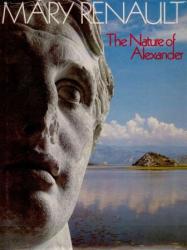
When I discovered an ebook version of this book I was at first very happy, then disappointed it did not contain any illustrations (unlike my 1975 hardcover version). So I have spent the last 2 weeks scanning and updating all the 97 illustrations. With the advantage of the internet, I was able to source much better versions of the original illustrations in many instances. The great historical novelist, Mary Renault, was most famous for her Alexander the Great trilogy: Fire From Heaven, The Persian Boy, and Funeral Games, covering the short but glorious life of Alexander The Great. Renault was famous for her meticulous research, using the original writings of Arrian, Quintus Curtius, Plutarch, Diodorus Siculus and others to ensure her historical accuracy. The life and times of Alexander was her great writing cause, and Renault displayed an astonishing ability to understand the mind of and write about the gay male. This is extraordinary, given the author was both female and lesbian. There are few other examples of female writers with such perspicacity. If you have read The Alexander Trilogy, you will surely agree there is little doubt this is a book that is rightfully at home at TVM.
Quote: Alexander the Great, like his boyhood hero Achilles, traded long life for lasting fame. His fame has lasted—far longer than the knowledge of his world, which is needed to understand him. He has been seen by every age in terms of its own life style. Romance has wrapped him in fantasy. Propaganda has exploited him since the days of imperial Rome. He has been condemned for sins which to men of his time were merits; and credited with nineteenth-century virtues which his own culture despised. The aim of Mary Renault’s study has been to peel off from this complex and dynamic human being the accumulated layers of wishful thinking, both idealizing and ideological, and show him not in our terms but his: as he saw himself, and was seen by his friends, his enemies, the men he led and the peoples he conquered. Besides the statements of those who knew him in life, of which many fragments have been preserved, she has studied the folk memory, ‘which can be neither enforced nor bought’, handed down in the lands he ruled. She describes his youth spent between embattled parents, themselves sprung from royal houses under constant threat from usurpation and war; the ideals and ambitions urged on him by his teacher Aristotle; and the reactions he produced in those around him when his status was insecure and he had no means of rewarding loyalty. Mary Renault’s best-selling novels about Alexander, Fire from Heaven, The Persian Boy, and Funeral Games, have involved her in some years’ close study of his life. Crucial episodes which she has re-examined are the murder of his father Philip, in which he has been accused of complicity; the sack of Thebes; the death of his general Parmenion : and the wishes he expressed upon his deathbed. From a study of the medical evidence she has suggested important possibilities about Alexander’s death, and that of his lifelong friend Hephaestion. This hard-hitting, controversial biography, firmly based on the sources, challenges the ideological interpreters of Alexander, past and present, who have sought to wrench him out of the context of his era. The text is supported by carefully chosen illustrations, many of them specially commissioned, reproducing contemporary art, documents or reconstructions of events, and modern photographs of the territories Alexander covered in his travels.
|