
Welcome Guest, Not a member yet? Create Account  


Forum Statistics

14 Members,   3,536 Topics,   10,207 Replies,   Latest Member is Stanley


  Romance in Marseille (2002)
Posted by: Simon - 12-16-2025, 07:41 PM - Replies (1)


The pioneering novel of physical disability, transatlantic travel, and black international politics. A vital document of black modernism and one of the earliest overtly queer fictions in the African American tradition. Published for the first time.
A Penguin Classic
A New York Times Book Review Editors' Choice/Staff Pick
Vulture's Ten Best Books of 2020 pick


Buried in the archive for almost ninety years, Claude McKay's Romance in Marseille traces the adventures of a rowdy troupe of dockworkers, prostitutes, and political organizers--collectively straight and queer, disabled and able-bodied, African, European, Caribbean, and American. Set largely in the culture-blending Vieux Port of Marseille at the height of the Jazz Age, the novel takes flight along with Lafala, an acutely disabled but abruptly wealthy West African sailor. While stowing away on a transatlantic freighter, Lafala is discovered and locked in a frigid closet. Badly frostbitten by the time the boat docks, the once-nimble dancer loses both of his lower legs, emerging from life-saving surgery as what he terms "an amputated man." Thanks to an improbably successful lawsuit against the shipping line, however, Lafala scores big in the litigious United States. Feeling flush after his legal payout, Lafala doubles back to Marseille and resumes his trans-African affair with Aslima, a Moroccan courtesan. With its scenes of black bodies fighting for pleasure and liberty even when stolen, shipped, and sold for parts, McKay's novel explores the heritage of slavery amid an unforgiving modern economy. This first-ever edition of Romance in Marseille includes an introduction by McKay scholars Gary Edward Holcomb and William J. Maxwell that places the novel within both the "stowaway era" of black cultural politics and McKay's challenging career as a star and skeptic of the Harlem Renaissance.

Continue reading..

  The End of My Life (first published 1947)
Posted by: Simon - 12-16-2025, 07:38 PM - Replies (1)


Vance Bourjaily's classic novel of World War II dramatizes an entire generation's loss of innocence.

When Thomas "Skinner" Galt leaves Greenwich Village to volunteer as an ambulance driver with the British Army, he anticipates the adventure of a lifetime. What he fails to understand is that no matter where he comes from or how many books he has read, once he dons a military uniform, his life will cease to be his own.

Stationed first in the Middle East and then in Italy, Skinner and his fellow American volunteers, Rod, Freak, and Benny, endure boredom, fear, and the exquisite frustration of following orders. They seek solace in their friendship with one another and in the debauched diversions available to men during wartime. But as the days and nights drag on, Skinner begins to drift away from his comrades—and from himself. Too late, he discovers that the path he has chosen leads only to tragedy. 

Quote: Published the same year as John Horne Burns' "The Gallery", "The End of My Life" is also a novel about World War II and its effects on the men who served. Bourjaily's narrative is structured around four young men who aren't in the military but instead join up with an ambulance crew for the British military in Syria and Lebanon before the U.S. had joined the war. Each has his own reasons for serving, running toward something, running away from something, or simply trying to understand how to live in a world that is seemingly falling apart.

Freak is the most 'normal guy' of the bunch and has joined the ambulance crew to do his part after failing to pass the medical exam for entry into the military. Benny, a Jewish communist understands the importance of the war and what it means for the future of the world, but particularly the future of the Jewish people and himself. Rod is a night club musician who doesn't stay in one place for long and doesn't seem to make lasting connections. Finally, Skinner Galt is the main character through whose eyes we see the action of the novel and feel the struggle of the characters.

Homosexuality is frankly acknowledged by all of the characters and it is understood that there are plenty of gay men in the military. Although it happens away from the action of the novel, Rod's relationship with one of the gay men in the ambulance outfit is offered in all its complexity. Rod isn't comfortable with what it means for him, particularly what it means for his mental health but at the same time he describes his feelings as love. So while the characters follow the gayness as illness paradigm of the time, they are also allowing for the relationship to be based on an emotional connection, not simply a physical or sexual one.

At its core, this novel is an exploration of what it means to be human. We like to think that we are all acting as individuals so what we do only affects ourselves. We don't like to acknowledge that our collective actions reflect on humanity as a whole. In Skinner's case, he doesn't get to separate himself from the consequences of war just because he drove an ambulance instead of firing a gun. As Benny points out toward the end of the novel, no human being is an exception to humanity.

Continue reading..

  Eustace Chisholm and the Works (1967)
Posted by: Simon - 12-16-2025, 07:35 PM - Replies (1)


A literary cult hero of major proportions, James Purdy's exquisitely surreal fiction—Tennessee Williams meets William S. Burroughs—has been populated for more than forty years by social outcasts living in crisis and longing for love. His acclaimed first novel, Malcolm (1959), won praise from writers as diverse as Dame Edith Sitwell, Dorothy Parker, and Gore Vidal, while his later works, from the award-winning In a Shallow Grave (1976) to Gertrude of Stony Island Avenue (1998), influenced new generations of authors. Eustace Chisholm and the Works, a 1967 novel that became a gay classic, is an especially outspoken book among the author's controversial body of work. Purdy recalls that Eustace Chisholm and the Works—named one of the Publishing Triangle's 100 Best Lesbian and Gay Novels of the 20th Century—outraged the New York literary establishment. More than breaking out of the pre-Stonewall closet, however, the book liberated its author and readers can be grateful for that. 

Quote: In a New Yorker piece from 2015, Jon Michaud suggests that Eustace Chisholm and the Works is "the peak of Purdy's career, the book of his to read if you’re only going to read one." Having only read Purdy's extraordinary short fiction, Eustace seemed to be the best place to begin an exploration of his longer form work. Purdy doesn't disappoint.

Set in mid 1930s depression era Chicago, Purdy's fifth novel gathers around Eustace Chisholm, a collection of Americans from small towns and rural areas who've come to the city in hopes of escaping financial hardship. Amos Ratcliffe, a student who loses his university fellowship and is too young to qualify for public aid is teaching Eustace basic Greek. Clayton Harms, an electric sign salesman moves in with Eustace when his wife Carla Chisholm goes on the run. Daniel Haws has a problem with sleepwalking and struggles with the impossibility of his feelings for young Amos. Maureen O'Dell is an artist who frequently finds herself in a family way.

Purdy's skill lies in his ability to create interpersonal tension among his characters. This is exemplified in the interactions between Amos and Daniel where they can't acknowledge what their relationship is or if there is a relationship at all. The already impossible situation between Amos and Daniel is made all the more impossible by Reuben Masterson, the heir to a family fortune who uses his money and position to lure Amos and Captain Stadger, a power hungry military officer, whose relentless attacks on Daniel eventually escalate to a soul-suffering defense of love.

The theme of the novel, in fact, is love; searching for love in a desperate world, accepting a love that may not appear in the form imagined, feeling worthy of that love, and enduring extraordinary pain in defense of that love. Purdy uses the mythologies of both ancient Greece and of Christianity to connect the characters lives to a larger moral story. Amos, a scholar of Greek, is described at one point as having feet like a goat (a reference to a satyr) and later as like the beautiful golden-locked Antinous. While modern literature is full of Freudian themes when it comes to explaining sexuality, Purdy uses a literal Oedipal moment to do so. Many of the characters' destinies seem out of their control and this idea of fate is introduced through a modern fortune teller; or what the Greeks would call an Oracle.

The larger story is couched in the Christian tradition. One can understand the gathering of characters as a pilgrimage of sorts where Eustace is the center of a group of disciples. Eustace in many ways acts as a confessor, the one with whom they can share their truths. Even when characters leave Chicago, letters to Eustace continue their stories. These epistles then become part of his grand poem written out on stacks of newspaper pages. Is his epic poem a Greek tragedy, scripture, or both?

Eustace Chisholm and the Works is story on a grand scale steeped in the traditions of myth. Purdy skillfully uses everyday lives to tell the larger story of humanity and elevates those lives that society would rather forget. One cannot help but be shaken by the power of this story and Purdy's writing.

Continue reading..

  James - Malcolm (1959)
Posted by: Simon - 12-16-2025, 07:32 PM - Replies (1)


Long out of print, James Purdy's novel Malcolm, first published in 1959, established Purdy as "one of the greatest writers produced in America during the past hundred years" (Dame Edith Sitwell). Malcolm is the bizarre story of an innocent young man of 'exceptional beauty' who becomes involved in a series of comic and poignant adventures. Taken under the wing of a famous astrologer, an undertaker, a billionaire, a midget painter, a jazz queen, America's foremost chanteuse, and a tattoo artist, among others, Malcolm is led endlessly from protector to protector in search of his missing father, until the journey itself becomes his undoing. 

Quote: James Purdy's Malcolm is both a contemporary comedy of manners and a satire of class and its trappings. Malcolm is a beautiful 15-year-old who spends his days on a bench outside the hotel where he lives. He is an innocent whose father disappeared nearly a year ago, and yet he still waits for his return. Short on funds, he's unsure what he will do.

Mr. Cox, an astrologer, is drawn to Malcolm and sees it as his responsibility to move him along from spending his days on this bench. In fact, he sees it as his responsibility to tell everyone what he thinks they should do; after all, it's in the stars. Cox connects Malcolm to a series of characters by providing him the addresses of his friends.

Malcolm meets 'little man', Kermit, a midget artist who is supported by his much larger wife Laureen, magnate Girard Girard and his wife Madame Girard for whom money is no object, artist Eloisa and her ex-con husband Jerome. They all struggle to posses Malcolm, to have the power to 'mature him'. His youth and inexperience, and frankly his lack of education, make for a great deal of comedy through misunderstanding. What follows is a pitched battle for ownership of Malcolm's youth and beauty, while highlighting the class distinctions among the players.

All of the characters are drawn to Malcolm. Some appear to want to protect his youth and innocence, while others seem intent on destroying it. While handled subtly, the suggestion that some of the male characters have a sexual interest in Malcolm as well as in one another appears throughout the work. This sexual fluidity is a hallmark of Purdy's characters and writing.

Continue reading..

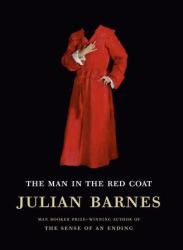
  The Man in the Red Coat (2019)
Posted by: Simon - 12-16-2025, 07:28 PM - Replies (1)


The Man Booker Prize-winning author of The Sense of an Ending takes us on a rich, witty tour of Belle Epoque Paris, via the life story of the pioneering surgeon Samuel Pozzi

In the summer of 1885, three Frenchmen arrived in London for a few days' intellectual shopping: a prince, a count, and a commoner with an Italian name. In time, each of these men would achieve a certain level of renown, but who were they then and what was the significance of their sojourn to England? Answering these questions, Julian Barnes unfurls the stories of their lives which play out against the backdrop of the Belle Époque in Paris. Our guide through this world is Samuel Pozzi, the society doctor, free-thinker and man of science with a famously complicated private life who was the subject of one of John Singer Sargent's greatest portraits. In this vivid tapestry of people (Henry James, Sarah Bernhardt, Oscar Wilde, Proust, James Whistler, among many others), place, and time, we see not merely an epoch of glamour and pleasure, but, surprisingly, one of violence, prejudice, and nativism—with more parallels to our own age than we might imagine. The Man in the Red Coat is, at once, a fresh portrait of the Belle Époque; an illuminating look at the longstanding exchange of ideas between Britain and France; and a life of a man who lived passionately in the moment but whose ideas and achievements were far ahead of his time. 

Quote: At the core of Barnes', The Man in the Red Coat is Dr. Samuel Pozzi, the subject of John Singer Sargent's famous portrait. This isn't, however, the typical biography of an individual. It's a biography of a place, a time, and a society.

The jumping off point is a 1885 trip to London by three Frenchmen for what they termed 'intellectual shopping' (something a dandy would do). One of the members of this trio was Dr. Pozzi. The others were Prince Edmond de Polignac and Count Robert de Montesquiou-Fezensac. So then the question becomes how did this commoner with the Italian name come to make this trip with a prince and a count.

The society during la Belle Epoque in Paris, serves as the foundation of the story Barnes has to tell. The relationships, petty jealousies, duels, and court cases are all included. A cast of characters include many lesser-known individuals, but some major names play a role in the world that the doctor, the prince and count inhabit.

Major literary figures such as Oscar Wilde and Joris-Karl Huysmans (author of A Rebours) appear, along with a fascinating discussion of aestheticism and dandyism. Wilde's trials are discussed in the context of the French vs British court systems. French cases like the Black Masses Scandal involving Baron Fersen (Jacques d'Adelsward-Fersen) who was charged with inciting minors to commit debauchery is briefly noted. A polarizing political issue during this time was the Dreyfus Affair, a blatant example of the anti-Semitism of the time. It's definitely a Who's Who of artists (Sargent, obviously), actresses (Sarah Bernhardt), authors, and society figures of the time period.

In the context of all of this literary and political intrigue was extraordinary progress in medicine and Dr. Pozzi was a the center of it. His experience with doctors such as British surgeon, Joseph Lister, aided Pozzi in improving surgical services in France and particularly in the area of gynecology, his specialty. This is a fascinating time of rapid growth in understanding germ theory and the ways to prevent infection.

All of this makes for a fascinating social history of la Belle Epoque Paris that is as exciting as any work of fiction.

Continue reading..

Online Users
There are currently 2 online users. 0 Member(s) | 2 Guest(s)

Welcome, Guest
You have to register before you can post on our site.

Username
  

Password


Search Forums

(Advanced Search)