
Welcome Guest, Not a member yet? Create Account  


Forum Statistics

14 Members,   3,536 Topics,   10,207 Replies,   Latest Member is Stanley


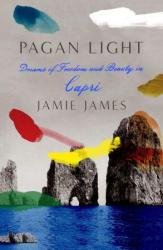
  Dreams of Freedom and Beauty in Capri (2019)
Posted by: Simon - 12-16-2025, 07:19 PM - Replies (1)


A New York Times Book Review Editors' Choice

" Pagan Light is mesmerizing. Every detail is compelling. I felt I was reading a family history of a family far more interesting than mine." --Edmund White, author of Our Young Man

A rich, intimate embrace of Capri, which was a magnet for artistic renegades and a place of erotic refuge
Isolated and arrestingly beautiful, the island of Capri has been a refuge for renegade artists and writers fleeing the strictures of conventional society from the time of Augustus, who bought the island in 29 BC after defeating Antony and Cleopatra, to the early twentieth century, when the poet and novelist Jacques d’Adelswärd-Fersen was in exile there after being charged with corrupting minors, to the 1960s, when Truman Capote spent time on the island. We also meet the Marquis de Sade, Goethe, Mark Twain, Oscar Wilde, Compton Mackenzie, Rilke, Lenin, and Gorky, among other astonishingly vivid characters.
Grounded in a deep intimacy with Capri and full of captivating anecdotes, Jamie James’s Pagan Light tells how a tiny island served as a wildly permissive haven for people―queer, criminal, sick, marginalized, and simply crazy―who had nowhere else to go.

Quote: Beginning with the Roman Emperor, Tiberius, Capri has a long history of accepting the eccentric and exiled from the less permissive parts of Europe. After establishing Capri's history in the Roman era, the author focuses primarily on the period from the Wilde trials through the mid 1930s during which time many sought artistic and sexual freedom there. The rise of the fascists, the focus of the final quarter of the book, brought significant change, not only to Capri, but to the world in general.

Pagan Light is a reference to maybe the most well known novel set in Capri, Norman Douglas' South Wind. Part travelogue, part literary and art history, James' book is difficult to define. It offers a series of vignettes of varying length connecting a veritable who's who of famous (and not-so-famous) literary and artistic expats. The minor players are offered as mere asides and provide a more complete sense of Capri's expat society. Pagan Light is anchored with biographical accounts of the little known novelist and poet, Jacques d'Adelswärd-Fersen and the artist Romain Brooks.

Adelswärd-Fersen flees Paris after his proclivities run afoul of the law. Interestingly it wasn't his sexual interest in teenage boys that was the problem, it was his use of them in his theatrical 'messes noires' (a supposed satanic ritual) to which he invited his friends. The details of this scandal would later be memorialized in his 1905 novel Messes Noires : Lord Lillian. An English translation of the novel, issued by Elysium Press, was published in 2005.

On Capri, Brooks was able to become an independent woman and present herself the way she was most comfortable. She cut her hair short and styled herself in trousers and jackets instead of dresses. She interacted within the society of lesbians of the time including Radclyffe Hall (author of the classic lesbian novel, The Well of Loneliness), Lady Una Troubridge (Hall's longtime lesbian partner), and American poet, Natalie Barney (Brooks' great love). Brooks is known for her portraits of important women in this lesbian circle as well as an early portrait of Jean Cocteau.

Adelswärd-Fersen and Brooks make for interesting subjects in that what we know of their lives is largely based on less than reliable depictions of them in their own and others writing. Adelswärd-Fersen's story is mostly known through The Exile of Capri, a roman à clef by Roger Peyrefitte, while Brooks' story largely comes from her own unpublished memoir as well as Compton Mackenzie's novel Extraordinary Women.

Continue reading..

Exclamation Trip Montgomery 03 - The Protector of Peace (2014)
Posted by: Simon - 12-16-2025, 07:05 PM - No Replies


Just weeks after Trip, Josh, and Sarah watched Gonzalez’s body turn to dust and blow away in the breeze, the dead man himself walked through the door of Pappy’s apartment. Is The Destroyer still alive? Can Trip stay focused and strengthen his connection with The Protector? Can he stay one step ahead of the evil presence bent on destroying him?


The Protector of Peace is packed with adventure as Trip follows clues left by the Founding Fathers of the United States, in hope of stopping The Destroyer from ruling the world. If he fails and The Destroyer unites all three pieces of The Triumvirate, the world as we know it will change forever.

Continue reading..

Exclamation Trip Montgomery 02 - The Forgotten Secret (2013)
Posted by: Simon - 12-16-2025, 07:03 PM - No Replies


In this follow up to Gasparilla’s Treasure, Trip, Josh, and Sarah team up with mysterious adventurer Juan Gonzalez on a quest to unite The Triumvirate, a legendary trio of mystical items that when brought together, will give the holder unimaginable power.


Having already found one of the items, Trip and his friends embark on a new quest to find El León Sagrado de Fuerza, The Sacred Lion of Strength.

Trip’s efforts to stay one step ahead of evil forces that plan on using El León Sagrado de Fuerza to control mankind lead him on an adventure across multiple states—a race that challenges him to uncover the mysteries of “The Forgotten Secret.”

Continue reading..

Exclamation Trip Montgomery 01 - Gasparilla's Treasure (2012)
Posted by: Simon - 12-16-2025, 07:02 PM - No Replies


Trip Montgomery has no idea what is in store for him when he finds the dusty old trunk hidden under the floorboards in his mom’s attic. The trunk reveals a series of mysteries that send him on the greatest adventure of his life. Will his best friend Josh and his new friend Sarah be able to help Trip solve the clues that lead to the greatest treasure ever known to man? Or will Trip’s obsession with the treasure drive him deep into the disorienting dreamland of his great grandfather Pappy?


Excerpts from Amazon reviews:


I was so excited to get my hands on this book; I certainly was not let down.

I cannot wait for the sequel, this was like a "National Treasure" for kids.

The characters are very well developed, and they're relatable and likeable.

Sometimes funny, sometimes mystery all ages will love this book! I got lost in the epic ending. Described so well that it is like watching a movie in mind. If you liked Goonies, read this book.

This story is rich! The dialogue is tightly written and smart. It's very approachable and witty. It's definitely worth the read!

Gasparilla's Treasure definitely ticked all the boxes for me and I have no hesitation in recommending it to any lover of adventure with a good touch of humor thrown in for good measure.

Will someone please make this into a movie, it's the "Goonies" of this generation.

I've always been a fan of treasure-hunting stories, and this one doesn't disappoint---the clues to the location of the treasure were really clever---and the ending of the book was thoroughly satisfying.

When my parents told me to go to bed, I couldn't put this book down! I live near St.Augustine and I can relate to all the historical sites. Thank-you Scott Clemets for writing Gasparilla's Treasure!

There is action, adventure, and even a bit of romance, as well as lessons about standing up for yourself, respecting your parents, dealing with hardships and loss, and being a good friend.

Continue reading..

  Nathaniel - The Gentle Boy (1837)
Posted by: Simon - 12-16-2025, 06:58 PM - Replies (1)


This early tale of Hawthorne's (first published in The Token, 1832) was deemed by Longfellow “the finest thing he ever wrote.” I do not share Longfellow's opinion, for this long short story is too diffuse and sentimental to rank with Hawthorne's best. Nonetheless, the tale has undeniable power. There are ironies here to balance the sentimentality, and the story embodies classic Hawthornean themes.


It is set in 1656, during Puritan persecution of the Quakers. Tobias, a kindly Puritan who finds the orphan Quaker Ibrahim mourning over the grave of his executed father, takes the boy home, and he and his wife Dorothy raise the boy as their own. But the other Puritans—and their children—are not kind to young Ibrahim; his life is difficult, and his naturally joyous temper tour so eventually to melancholy.

Hawthorne refuses to take sides between the Quakers and the Puritans. The Quakers—at least the 17th century variety—are unbalanced in their enthusiasm, occasionally (as in the case of Ibrahim's mother Catharine) close to madness. The Puritans, on the other hand, let cold intellect not only to demarcate the limits of correct religious doctrine, but allow it also to circumscribe the limits of their compassion. Both would benefit by a union of the head with the heart.

This is an affecting, inspiring tale, filled with sadness yet touched by optimism, for we see how the Puritan culture in general—and Tobias and Dorothy in particular—subtly grow in tolerance and warmth as a result of what they have done and seen.

Continue reading..

Online Users
There are currently 2 online users. 0 Member(s) | 2 Guest(s)

Welcome, Guest
You have to register before you can post on our site.

Username
  

Password


Search Forums

(Advanced Search)