
Welcome Guest, Not a member yet? Create Account  


Forum Statistics

14 Members,   3,536 Topics,   10,207 Replies,   Latest Member is Stanley


  Wrong Locker (2023)
Posted by: Simon - 12-14-2025, 08:15 PM - Replies (1)


In a world where Kinsley's the odd one out in his sports-obsessed family, he finds solace in his art and his friendship with Isabella, a talented Latina tagger. When pressured by his parents to find a girlfriend, Kinsley takes a chance and delivers a letter to a girl he finds attractive, only to discover it ends up in the hands of the popular, yet lonely captain of the sports team. Despite his status, he hides behind his fake smile to disguise his sad home life. Having no one to talk to about anything real weighed in on him until one day he opened his locker and discovered a mysterious letter.

As they both navigate their own struggles, the mysterious letter becomes a catalyst for a connection neither of them expected. But what happens when they both discover that the other person on the side of the letter isn't a girl, but had been a boy all along?

Continue reading..

  Heart, A Schoolboy's Journal (1886)
Posted by: Simon - 12-14-2025, 08:09 PM - Replies (1)


Written following the Italian war for independence by a sub-lieutenant who had fought in the siege of Rome in 1870, Heart is the fictional diary of a boy's third year in a Turin municipal school. It was written to foster juvenile appreciation of the newfound Italian national unity, which the author had fought for in the recent war.


The book is often highly emotional, even sentimental, but gives a vivid picture of urban Italian life at that time. A master, introducing a new pupil, tells the class, "Remember well what I am going to say. That this fact might come to pass--that a Calabrian boy might find himself at home in Turin, and that a boy of Turin might be in his own home in Calabria, our country has struggled for fifty years, and thirty thousand Italians have died."

The novel became internationally popular, and has been translated into over twenty-five languages, and is part of the UNESCO Collection of Representative Works. Edmondo de Amicis (1846-1908) established a reputation as a writer in various genres after his experience as a soldier. 

Quote: Through its investigation of social issues such as poverty, Heart shows the influence of left-wing ideologies on De Amicis' work (he was later to join the Italian Socialist Party). Because of this, the book remained influential (and the staple of many textbooks in countries of the Eastern Bloc. On the other hand, the book's strong evocation of Italian nationalism and patriotism also made it very welcome in Fascist Italy.


Enrico's parents and older sister Silvia interact with him as written in his diary. As well as his teacher who assigns him with homework that deals with several different stories of children throughout the Italian states who should be seen as rolr models – these stories are then given in the book as Enrico comes upon reading them. Every story revolves around a different moral value, the most prominent of which are helping those in need, having great love and respect for family and friends, and patriotism. These are called 'The Monthly Stories' and appear at the end of every school month.

Continue reading..

  St. Matthews Passion, or The Schoolboy's Dilemma (1988)
Posted by: Simon - 12-14-2025, 07:56 PM - Replies (1)


Bobby, a 14-yr-old American boy, unloved by his mother, is packed off to a British boy's school. There he undergoes all the adjustments of a "new boy," including brutal sexual treatment by the older boys and falling in love, erotically and charmingly, with a classmate. Jared Bunda shows boys as they really are, how they talk, how they feel, the great storms of happiness, sadness, anger, love and lust that sweep through their ripening minds and bodies.

The first book about Bobby Ames and Anthony and their lives at St. Matthew's. It tells of Bobby's struggles, as an American lad, to find acceptance with his English classmates, of "candy striping" and other brutal games played by the older boys on the younger. A vivid, amusing, exciting, erotic tale of boys on their tumultuous journey through adolescence. 


Continue reading..

  Joseph - Crab Bait (2023)
Posted by: Simon - 12-14-2025, 07:52 PM - Replies (1)


The year is 1888, it's Ripper murders in the capital as the New World flaunts a Gilded Age. In London, best men seek solace in the gentlemen's clubs, hidden-away places catering to their every interest.
Sizar's is a secret one, a new-club breed that lures athletic workhouse lads with the bait of a better life. But when a pledge gets dead-snagged under West Pier, a Scotland Yard detective hunts for clues.
Scandals wash in, bodies mount, boys clash in jealous pursuit, death keeps things fresh and gone ones haunt as five men tell the tale of the curious case of the beautiful creature under the pier.

Review
"Brennan has constructed an immersive puzzle, one that delights in shattering Victorian facades of class and propriety with sex and blood. ... a fascinating look into the strange, lost world [of] gentleman's clubs and the young men ensnared in their customs.
A rich, dark mystery set in repressed 19th-century London." - Kirkus Reviews 


Quote:A series of grisly murders disrupts Victorian London’s covert gay scene in Brennan’s historical thriller.

In 1888, the city of London is abuzz over the sensational murders of Jack the Ripper in the East End, but over on the West End—in a neighborhood known as “Clubland” for its concentration of gentleman’s clubs—another murderer is at work. The most infamous of the clubs is Sizar’s, a place where boys from poor backgrounds can rise in the world so long as they’re willing to “bend.” Former Navy man Stewart Marsh sorts boys for Sizar’s; when he can, he sneaks down to Brighton to go for a run on the beach. It is here, beneath a pier, that he finds an unwelcome sight: “Snagged in the pooled crevice where sand had been drawn away by the tide lay a young man. He felt able to adjudicate the mound’s youthfulness by the roundness of boyish bulk, having refereed many a wrestling match in the scouting for Sizar’s.” The body belongs to an infamous pimp and blackmailer known as the Pipe, a young man who many might have wished dead. But who actually did the deed? As Scotland Yard Detective Oscar Glass gets to the bottom of the crime, bodies continue to pile up, and the evidence seems to point right to the heart of Sizar’s itself. Brennan has constructed an immersive puzzle, one that delights in shattering Victorian facades of class and propriety with sex and blood. Unfortunately, the author’s baroque prose weighs the story down like an anchor: “White and soft was the fall from London Bridge into the Thames,” opens one chapter; “Painless and warm, too. Death was, truly, as the evangelical preachers promised it to be: a sweet relief. Instead of the mucky freeze of the black Thames at midnight, impact was straight into the clouds.” Those who can weather the mannered prose will be treated to a fascinating look into the strange, lost world gentleman’s clubs and the young men ensnared in their customs.

Continue reading..

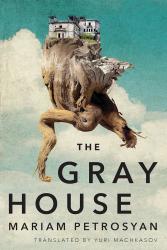
  The Gray House (first pub. 2009, 2017)
Posted by: Simon - 12-14-2025, 07:45 PM - Replies (1)


‘The Gray House’ is an astounding tale of how what others understand as liabilities can be leveraged into strengths.

Bound to wheelchairs and dependent on prosthetic limbs, the physically disabled students living in the House are overlooked by the Outsides. Not that it matters to anyone living in the House, a hulking old structure that its residents know is alive. From the corridors and crawl spaces to the classrooms and dorms, the House is full of tribes, tinctures, scared teachers, and laws — all seen and understood through a prismatic array of teenagers’ eyes.

But student deaths and mounting pressure from the Outsides put the time-defying order of the House in danger. As the tribe leaders struggle to maintain power, they defer to the awesome power of the House, attempting to make it through days and nights that pass in ways that clocks and watches cannot record. 

Quote: The Gray House by Mariam Petrosyan — a cult magical realist saga

A runaway success in Russia, translated into English at last, this epic set in a school for students with disabilities offers so much more than a Soviet Hogwarts

Gangs of teenagers have strange adventures in a rambling boarding school on the edge of town: it sounds like a premise for a children’s book. But Mariam Petrosyan’s first novel, a 732-page magical realist saga two decades in the writing that has been a cult success in Russia, has unexpected depths as well as lashings of alcohol and violence. The Gray House is enigmatic and fantastical, comic and postmodern, flawed but brilliant, with elements of multiple genres — Rowling meets Rushdie via Tartt.

It is the latest offering from AmazonCrossing, which now produces more books in translation than any other US publisher, focusing on popular and accessible fiction. Marian Schwartz, who translates for them, says: “Amazon may be bad for booksellers, but I don’t see AmazonCrossing being bad for literary translation.” The problem is sales: the books are not often available in shops and are rarely reviewed because “everyone hates Amazon”. So can The Gray House be successful in English?

In the mid-1990s, Petrosyan, an Armenian graphic artist, showed friends in Moscow the manuscript of her then-unfinished novel. Passed from hand to hand, it found its way to a publisher in 2009. The following year, it was shortlisted for the Russian Booker and won several awards. It has since inspired postgraduate dissertations, Instagram pages of fan art and long signing queues. But Petrosyan has refused to write a sequel or sell the film rights to this complex and unusual epic.

The House is a school for students with disabilities; this literary ruse to isolate the protagonists is also an integral part of the novel’s exploration of identity. The teenagers use wheelchairs or prosthetics and the leader of the house is blind. Mundane details may not always ring true, but there is nothing sentimental or tokenistic about these wisecracking young adults, sporting dreadlocks, tattoos and a murderball-style physicality.

Different characters narrate an overlapping series of events. Most of them are known only by a pseudonym or “nick”. We first experience the house through the eyes of Smoker; he is an outsider, who moves from the conformist “Pheasants” dormitory to the anarchic “Fourth”. Alternating with this are flashback chapters in which, confusingly, several people have different, earlier nicknames. Petrosyan excels at the fresh details that make up individual personalities. One inscrutable youngster likes “seltzer, stray dogs, striped awnings, round stones” and hates “white clothing, lemons … the scent of chamomile”.

Individuality is a central theme, producing a symphony of narrative voices. “Everyone chooses his own House. It is we who make it interesting or dull,” explains a student called Sphinx. Later Sphinx tells his girlfriend, one of the novel’s relatively rare female characters: “Whoever’s telling the story creates the story. No single story can describe reality exactly the way it was.”

The number of narrators proliferates, including the appealing figure of Tabaqui the Jackal, whose entries provide a kind of authorial manifesto: “I don’t like stories. I like moments. I like night better than day, moon better than sun, and here-and-now better than sometime-later.” Tabaqui embodies Petrosyan’s inventiveness, her resistance to chronology, her penchant for false trails and signs.

The house, it emerges, has hidden dimensions. Petrosyan plays with space and time, introducing parallel loops of narrative and a weird “Forest” with its own impenetrable laws. This boundless psychogeography distinguishes the school from a gritty Soviet version of Hogwarts, although there are superficial similarities — dorms that are sorted by personality types, mentions of dragons and basilisks.

At other times, there are echoes of Lord of the Flies: rival gangs of ungovernable boys, face painting, fires. Songs and fairytales are part of the textual patchwork, along with all kinds of allusions, from Hieronymus Bosch to the Kama Sutra. Petrosyan’s stylistic quirks match her flamboyant protagonists; one gothic-sounding sentence, rich in sub-clauses, lasts a page and a half. Yuri Machkasov’s translation is a Herculean feat. The intriguing original title, The House, In Which …, has gone, but Machkasov has captured the novel’s poetic richness.

The Gray House is a Marmite book: worshipped by some, criticised by others as meandering nonsense, lacking either true magic or convincing realism. The plot can feel frustratingly serpentine, but, as Tabaqui explains: “Life does not go in a straight line.” To its most ardent fans, a spell in Petrosyan’s mysterious house is nothing short of life-changing.
 

Continue reading..

Online Users
There is currently 1 user online 0 Member(s) | 1 Guest(s)

Welcome, Guest
You have to register before you can post on our site.

Username
  

Password


Search Forums

(Advanced Search)