 |
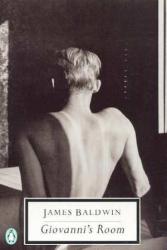

Baldwin's haunting and controversial second novel is his most sustained treatment of sexuality, and a classic of gay literature. In a 1950s Paris swarming with expatriates and characterized by dangerous liaisons and hidden violence, an American finds himself unable to repress his impulses, despite his determination to live the conventional life he envisions for himself. After meeting and proposing to a young woman, he falls into a lengthy affair with an Italian bartender and is confounded and tortured by his sexual identity as he oscillates between the two.
Examining the mystery of love and passion in an intensely imagined narrative, Baldwin creates a moving and complex story of death and desire that is revelatory in its insight.
Quote: I don’t remember exactly how old I was when I first discovered Giovanni’s Room, but I was quite young, maybe 14 or 15. I grew up in Louisville, Kentucky, and there was a wonderful independent bookstore in town, a place called Hawley-Cooke, where, since I was a bookish kid, I spent pretty much every Friday night. This store had a section dedicated to lesbian and gay literature, tucked away in a back corner, and each time I went I would spend a few sweaty minutes there before I snatched a title and carried it to another part of the store to sit and read.
I have mixed feelings about lesbian and gay sections in bookstores now, but it was a wonderful resource for the pre-internet kid I was. As a student in Kentucky’s public schools, which means I wasn’t getting much of a literary education, I didn’t have any idea what names to look for. I chose books almost at random, based on their titles, I guess, or their covers, a method that led me to Edmund White, Yukio Mishima, Jeanette Winterson, Baldwin. It’s hard to overstate what those books meant, growing up in the American south, or the solace I took from them and from their vision of queer life as possessed of a measure of human dignity. It didn’t matter that that dignity was so often the dignity of tragedy; it was still a kind of antidote to shame.
Shame is one of the central subjects of Giovanni’s Room, published in 1956 and recounting a tormented love affair in Paris between the American narrator, David, and Giovanni, an Italian bartender. But that’s not stating it strongly enough: the whole novel is a kind of anatomy of shame, of its roots and the myths that perpetuate it, of the damage it can do. And also of its arbitrariness, since as rebuttal to any claim that shame might be some natural accoutrement of queerness – the belief that lies at the heart of David’s malaise – the novel offers the fact of Giovanni, who seems immune to shame, or at least to the shame that plagues David. And it is this freedom that makes him available to the joy and love David finally believes men can’t share with one another. That was the balm of the book when I first read it, the sense it gives that the tragedy it recounts is anything but inevitable, the result not of some ineluctable dynamic of same-sex desire but of the limitations of David, a grievously damaged man.
I read Giovanni’s Room again in college, and once more after that, several years later, when I considered assigning it to my high school students in Ann Arbor, Michigan. I read it again recently because I was asked to speak on it, which I had been asked to do because it has often been referenced in discussions of my own novel. I knew that I owed the book a great deal, and it’s a debt I’m eager to acknowledge. But I hadn’t realised until this recent rereading, which was also the first time I read the book as a novelist, just how much I had learned from it. I had never studied fiction before I wrote my first novel; all of my education in craft was of this unconscious kind, an imitation of things I admire in the books I love.
I remembered, of course, the narrative elements my book shares with James Baldwin’s: an American narrator abroad, overcome by feeling that, for all its force, runs hot and cold, desire wrangled with ambivalence. But I was struck this time by formal and stylistic strategies I think I must have first encountered in the book. I hadn’t read Henry James when I discovered Giovanni’s Room, and so I suspect this was the first time I had encountered a novelist tracking Jamesian microclimates of feeling, something Baldwin does throughout the novel to great effect. There’s a marvellous moment just before David and Giovanni meet, when David moves through a crowd of men excited by the presence of the new bartender: “it was like moving into the field of a magnet or like approaching a small circle of heat.”
But what I admire most in the book is its peculiarly lyrical conception of time. The novel is framed by present-tense scenes set at the end of the drama, in the night before Giovanni is going to be executed. This frees Baldwin from any of the sometimes clunky strategies of narrative withholding and suspense. All of the book’s major plot points are declared in the first pages: we know that David has abandoned Giovanni, we know that David’s ex-fiancee Hella has returned to the United States, we know that Giovanni has been sentenced to die.
There’s a strange kind of pleasure in disclosing so much of the story up front. Placing the point of telling here gives Baldwin access to the entire narrative at every point, allowing him to move freely back and forth across the entire timeline of the action. On the first page of the book, David casts forward into the future, imagining the bus ride he will take to Paris; on the second, he remembers meeting Hella; immediately after this first scene, the book dives into the deep past of David’s childhood. This rather extraordinary freedom with time is put to very moving effect at several points in the novel, perhaps most of all when, in giving a sense of David’s few happy weeks with Giovanni, Baldwin both holds time in abeyance and allows us to track its passage. He does this by means of a generalised, flyover narration of a “typical day” – morning, noon and night – that is interrupted by scenes in which we can hear the pleading of an increasingly agitated and perplexed Giovanni.
I said that the book gave me, as a teenager in Kentucky, an antidote to shame. But it’s also true that the book gives rather horrifying voice to David’s self-loathing disgust at homosexuality. There’s an extraordinarily painful passage early on, just before David meets Giovanni, when he observes a group of effeminate gay men. He describes them through a series of animal metaphors, first as parrots, then as peacocks occupying a barnyard. Finally, in an image that pains me every time I read it, David says of a young man in drag that “his utter grotesqueness made me uneasy; perhaps in the same way that the sight of monkeys eating their own excrement turns some people’s stomachs. They might not mind so much if monkeys did not – so grotesquely – resemble human beings.”
Giovanni’s Room is one of Baldwin’s only fictional works – the other is a very short story – in which all of the characters are white. He said in interviews that he didn’t feel he could tackle at one time the dual agonies of racism and hatred of gay people, but in fact race runs throughout the book, not least in this horrifying image, which is radioactive with the iconography of American racism. Homosexuality is portrayed in racial terms repeatedly in Giovanni’s Room. Joey, the childhood friend with whom David spent one passionate night, is described repeatedly as “brown” and “dark”. Giovanni himself is “dark and leonine”; more pointedly, he’s imagined in this first scene as standing “on an auction block”. Race is an imaginary category, under constant negotiation; it’s worth remembering that in America, not long before Giovanni’s Room, Italians and other southern Europeans were viewed as non-white.
America is among the novel’s deepest preoccupations, and this too is something that struck me in a new way as I reread Baldwin’s novel after having written my own. Maybe it’s true that all books about Americans abroad are finally books about America; certainly it’s the deep subject of Henry James’s novels, maybe particularly in The Ambassadors, which was Baldwin’s favourite. I think it’s the profoundest experience of living abroad when one discovers, maybe for the first time, what home means. Or what home meant, since the meaning seems so much to depend on its loss. “You don’t have a home until you leave it,” Giovanni tells David, “and then, when you have left it, you never can go back.”
For Baldwin, American identity – and in his essays he makes clear that he means white American identity – is an elaborate form of defence, a series of myths meant to insulate one from unbearable realities. To be American, Giovanni says in his first conversation with David, is to believe that “with enough time and all that fearful energy and virtue you people have, everything will be settled, solved, put in its place. And when I say everything … I mean all the serious, dreadful things, like pain and death and love, in which you Americans do not believe.” This first conversation is full of flirtation and play; later, Giovanni restates this with infinite bitterness. “You do not know any of the terrible things,” he says, and David, finally, agrees with him, once he has himself tasted real bitterness, once he has lost what he calls “the peculiar innocence and confidence, which will never come again”.
The book’s most famous lines about America are given to Hella; she delivers them in her final scene. “Americans should never come to Europe,” she says. “It means they never can be happy again. What’s the good of an American who isn’t happy? Happiness was all we had.” She doesn’t tell us exactly what she means by happiness, but I think for its clearest articulation we should return to that first, flirting scene between Giovanni and David. “What do you believe,” David asks him, and Giovanni responds:
“I don’t believe in this nonsense about time. Time is just common, it’s like water for a fish … And you know what happens in this water, time? The big fish eat the little fish. That’s all. The big fish eat the little fish and the ocean doesn’t care.”
“Oh please,” I said. “I don’t believe that. Time’s not water and we’re not fish and you can choose not to be eaten and also not to eat – not to eat,” I added quickly, turning a little red before his delighted and sardonic smile, “the little fish, of course.”
“To choose!” cried Giovanni, turning his face away from me … “To choose!” He turned to me again. “Ah, you are really an American.”
American happiness is this peculiar innocence, then, the belief that one can choose, and without great sacrifice or cost, to be good, by which I mean to be exempt from necessity, to move through the world without causing harm. This is what David loses, and perhaps emphasising this loss is the most important effect of Baldwin’s beginning the novel where he does, at the end, with David lost in a kind of moral nakedness.
Giovanni’s Room is, finally, a book about an American stripped of the myths of America, most of all the story we love to tell ourselves about the possibility of new beginnings and clean starts – that is to say, the impossibility of anything irrevocable ever happening to us. But now something has happened to David that can never be made right and from which he can’t simply walk away. And this is the most important justification for how Baldwin uses time in the novel: now David’s past will always be his present. “Perhaps home is not a place,” David thinks, in a haunting line, “but simply an irrevocable condition.” He is thinking of his homosexuality. This thought occurs to him as he realises a passing sailor has seen the desire he wasn’t fully aware he was feeling. But even more than desire, it is grief for Giovanni and guilt over his fate that provide David his irrevocable condition, an identity he finally can’t pretend to shed: his disconsolate and deeply un‑American home.
|