Welcome Guest, Not a member yet? Create Account  


Forum Statistics

14 Members,   3,536 Topics,   10,207 Replies,   Latest Member is Stanley


  At the Edge of the Night (1933)
Posted by: Simon - 12-09-2025, 08:40 PM - Replies (1)


This poignant novel, beautifully translated by Simon Beattie, was, in Lampe’s words, "born into a regime where it could not breathe;" he hoped that one day it might rise again. It has no one main character, but evokes the sensations and impressions of a sultry September evening on the waterfront of Bremen, with its charm and tenderness, squalor and lust. It contains a stream of images with many characters: children, old and young people, men and women, townsfolk, performers, students and seamen. Things happen as they happen, horrible things, touching things. Its depiction of raw reality was unacceptable to the Nazis: the book was seized by them in December 1933 and withdrawn from sale.

Review
" At the Edge of the Night appeared in 1933. I read it at the time with great interest, as German prose writers of such quality were rare even then. . . . And what struck us at the time . . . as so beautiful and powerful has not paled, it has withstood; it proves itself with the best, and captivates and delights just as then." — Hermann Hesse

Continue reading..

  The Orchid Trilogy (1981)
Posted by: Simon - 12-09-2025, 08:37 PM - Replies (1)


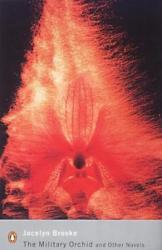
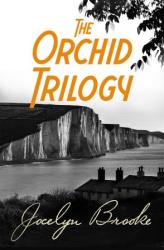
A disarming, lyrical hybrid of fiction and autobiography, this forgotten masterpiece of post-war English fiction follows a small boy through his First World War childhood and teenage years on the Kentish coast, then into the army and frontline service in the Second World War. Obsessed by his strange twin passions for orchids and for fireworks, the author-narrator paints a haunting portrait of a childhood and adulthood interleaved with one another in a near-mystical rural idyll. Defined by his unspoken homosexuality, the books capture the unfolding of a melancholy, often painfully sensitive male consciousness. First published in the late 1940s as three separate but interlinked volumes - "The Military Orchid"; "A Mine of Serpents" and "The Goose Cathedral" - The Orchid Trilogy conjures up a rapturous, fantastical portrait of England at war and peace in the 20th century. Witty, subtle and deceptively simple, this unjustly neglected classic that has yet to be surpassed in its exploration of the magical world of childhood. One of those too-rare books whose enjoyability makes it seem too short - Elizabeth Bowen 

It is a kind of collage of sharply drawn bits of real life, excellently described and artistically arranged - Stephen Spender 
Reminiscence and reflection and description are woven together to make a curious and fascinating tapestry - David Cecil 
Mr. Brooke's finely shaped prose, his wit, percipience, and liveliness in the description of people, places, and states of mind are a rare delight - The Scotsman 
A sad, funny, densely detailed yet continuously readable experience - The Observer 
One of the most exciting creative artists of our time and one who will consistently evade all the literary categories - John Pudney

Quote: Life and career
Brooke was born at Folkestone in Kent, the third child of a wine merchant, who with his wife was a Christian Scientist.[1] Sent initially to the King's School, Canterbury, Brooke was deeply unhappy there, and ran away twice. He then was moved to at Bedales School before going up to Worcester College, Oxford, Brooke's childhood revolved mostly around his principal interests of amateur botany and fireworks, in the shadow of the First World War. "When the Second World War began he enlisted in the Royal Army Medical Corps (RAMC) and became one of the pox wallahs, those working to treat venereal disease. Brooke was decorated for bravery."

Elements of his experiences, and his love of the military life, appear in most of his subsequent works, to the extent that much of his fiction can be regarded as at least partly autobiographical.

Though the Orchid Trilogy strays into a typically English vein of humour, the idyllic land of his childhood and his obsession with le paradis perdu ('paradise lost') often bring in an element of intense melancholy, something developed in paranoia and isolation in The Image of a Drawn Sword.

Brooke's biographical non-fiction focuses on other authors who shared at least some of his own sensibilities: in particular Ronald Firbank, the subject of two of his books, and Denton Welch, the first edition of whose journals Brooke edited, as well as a collection of short stories published at a time when Welch was otherwise out of print.

Brooke's reputation suffered after his death and it has never really recovered. Considered by Anthony Powell to be under-rated, some of his writings have occasionally appeared in paperback in recent years.

The Goose Cathedral
The old Seabrook Lifeboat station, which is the defining symbol of the third novel in Brooke's Orchid Trilogy, was turned into the Boathouse Café in the 1930s. It is described thus at the end of the book: "It was a grey, chilly evening, threatening rain; by the time I reached the bottom of Hospital Hill, it was quite dark. Dimly-lighted, the Goose Cathedral loomed through the blackness; I crossed the road, and approached the back entrance, facing towards the camp. A small conservatory or 'winter garden', like some salvaged fragment of the Crystal Palace, had been built on to this side ..."

"In the faint electric light, the interior of the café seemed enormous, barn-like ... down the sides of the room were placed a number of solid, mahogany tables: the light gleamed vaguely on their polished surfaces ... I realized that I was sitting, at last, beneath the roof of the Goose Cathedral – that sinister and sacrosanct chapel-by-the-sea where, in my childhood, the enormous blue-and-red lifeboat had crouched, mysteriously, like a sea-monster in its lair."

The Dog at Clambercrown
In 1955 The Bodley Head published The Dog at Clambercrown, which The Times described as Brooke's "latest autobiographical voluntary". The book is subtitled "An Excursion", and deals with two journeys which took place at a distance of time; a visit to Sicily in the fifties and his search for the eponymous country inn in a remote part of the Kent countryside as an adolescent. Anthony Powell, Brooke's friend and champion, thought it Brooke's best book. It revisits ideas and themes from the earlier Orchid Trilogy, but with perhaps an even greater confidence. In the typical Brooke manner, he holds up the narrative for critical digressions on such writers as DH Lawrence and James Joyce, making sharp and perceptive comments about both. Lawrence, Brooke thinks, was homosexual.

Continue reading..

  Signé: alouette (1960)
Posted by: Simon - 12-09-2025, 08:32 PM - Replies (1)


Depuis plusieurs jours, un aveugle s’assoit sur un banc devant le collège. Intrigués, Noël et ses copains décident de le suivre et découvrent que son handicap est une supercherie. Que peut bien manigancer cet imposteur ? Et puis, il y a ces messages mystérieux qui s’affichent à la fenêtre de la bijouterie du trottoir d’en face. Les jeunes détectives pensent alors aux préparatifs d’un braquage dans lequel le faux aveugle serait impliqué. Entraînés dans leur enquête, nos héros n’imaginent pas que l’un d’entre eux court un grand danger… 

For several days a blind man had been visiting a bench just outside the school. Noël and his friends were intrigued, and decided to follow him. They found out his handicap was a fraud. What manner of plot was this imposter hatching? Then mysterious messages began to appear in the window of the pavenent jeweller across the road.  The young detectives thought they'd stumbled upon preprations for a robbery that implicated the fake blind man. Engrossed in their investigations, our heroes never though that one of them was courting grave danger …

Continue reading..

  Les disparus de St Agil
Posted by: Simon - 12-09-2025, 08:28 PM - Replies (1)


Quote:« Chaque nuit, Baume, Sorgue et Macroy, pensionnaires du collège Saint-Agil, se retrouvent en salle de sciences autour du squelette Martin. Ils ont créé une société secrète,  » les Chiche-Capons « , dont le but est de partir faire fortune aux États-Unis. Un soir, Sorgue aperçoit un mystérieux individu qui semble sortir du mur.

Le lendemain, en cours d’anglais chez M. Walter, il tente de persuader ses camarades qu’il a vu un homme invisible. Convoqué chez le directeur, il disparaît à la sortie du bureau. Tout le monde pense à une fugue jusqu’au jour où une carte postale arrive de New York avec la signature  » Chiche-Capon « …. «

Quote: Every evening, Baume, Sorgue and Macroy, boarders at St Agil school, gather in the science room around the skeleton named Martin, They have set up a secret society called the "Chiche-capons", whose aim is to set out to make their fortune in the USA. One evening, Sorgue notices a mysterious individual apparently stepping through the wall.

The next day, in M Walter's English class, he tries to convince his friends that he saw an invisible man. Summoned by the Headmaster, he disappeared on leaving the office. Everyone thought he'd run away, until a postcard arrived from New York with the signature: "Chiche-Capons" …

Continue reading..

  Hervé - Fou de Vincent (2016)
Posted by: Simon - 12-09-2025, 08:18 PM - Replies (2)


Dans la nuit du 25 au 26 novembre, Vincent tombait d'un troisième étage en jouant au parachute avec un peignoir de bain. Il a bu un litre de téquila, fumé une herbe congolaise, sniffé de la cocaïne. Le retrouvant inanimé, ses camarades appellent les pompiers. Vincent se redressa brusquement, marcha jusqu'à sa voiture, démarra. Les pompiers le coursent, s'engouffrent dans son immeuble, montent avec lui dans l'ascenseur, pénètrent dans sa chambre, Vincent les injurie. Il dit « Laissez-moi me reposer », eux : « Andouille, tu risques de ne jamais te réveiller. » Dans la chambre d'à côté, ses parents continuent de dormir. Vincent a foutu les pompiers dehors. Il s'est endormi comme un charme. À neuf heures moins le quart, sa mère le secoue pour l'envoyer au travail, il ne peut plus bouger d'un pouce, elle le transporte à l'hôpital. Le 27 novembre, prévenu par Pierre, je rendis visite à Vincent à Notre-Dame-du-Perpétuel-Secours. Deux jours plus tard il mourait des suites d'un éclatement de la rate. Ce livre est paru en 1989.


On the night of November 25 to 26, Vincent fell from a third floor while playing parachute with a bathrobe. He drank a liter of tequila, smoked Congolese weed, snorted cocaine. Finding him unconscious, his comrades called the firefighters. Vincent stood up abruptly, walked to his car, and drove off. The firefighters chase him, rush into his building, get into the elevator with him, enter his room, Vincent insults them. He says, “Let me rest,” they say, “Andouille, you risk never waking up. » In the next room, his parents continue to sleep. Vincent kicked the firefighters out. He fell asleep like a charm. At a quarter to nine, his mother shook him to send him to work, he couldn't move an inch, she took him to the hospital. On November 27, warned by Pierre, I visited Vincent at Notre-Dame-du-Perpétuel-Secours. Two days later he died from a burst spleen. This book was published in 1989.

Crazy for Vincent[/b] begins with the death of the figure it fixates upon: Vincent, a skateboarding, drug-addled, delicate "monster" of a boy in whom the narrator finds a most sublime beauty. By turns tender and violent, Vincent drops in and out of French writer and photographer Hervé Guibert's life over the span of six years (from 1982, when he first met Vincent as a fifteen-year-old teenager, to 1988). After Vincent's senseless death, the narrator embarks on a reconnaissance writing mission to retrieve the Vincent that had entered, elevated, and emotionally eviscerated his life, working chronologically backward from the death that opens the text. Assembling Vincent's fragmentary appearances in his journal, the author seeks to understand what Vincent's presence in his life had been: a passion? a love? an erotic obsession? or an authorial invention? A parallel inquiry could be made into the book that results: Is it diary, memoir, poem, fiction? Autopsy, crime scene, hagiography, hymn? Crazy for Vincent is a text the very nature of which is as untethered as desire itself.

Continue reading..

Online Users
There is currently 1 user online 0 Member(s) | 1 Guest(s)

Welcome, Guest
You have to register before you can post on our site.

Username
  

Password


Search Forums

(Advanced Search)