
Welcome Guest, Not a member yet? Create Account  


Forum Statistics

14 Members,   3,536 Topics,   10,207 Replies,   Latest Member is Stanley


  The Murder of My Aunt(1934)
Posted by: WMASG - 12-07-2025, 11:32 AM - Replies (1)


One of the "lost" novels listed in:
Lost Gay Novels: A Reference Guide to Fifty Works from the First Half of the Twentieth Century by Anthony Slide (2003)

The best, and by far the most entertaining, of the early English mystery novels with a gay angle is Richard Hull’s The Murder of My Aunt . In this darkly comic, quite immoral masterwork, Edward is an effete, poor young man who has something in store for his only relative, his wealthy aunt. First published in 1934, this classic mystery is considered a masterpiece of the inverted detective story, in which it is known "whodunit." The question is "how will they catch 'em?" Highly unpredictable, it contains one of the most surprising denouements in all of detective fiction.

Continue reading..

  The Dark Mother (1920)
Posted by: WMASG - 12-07-2025, 11:29 AM - Replies (1)


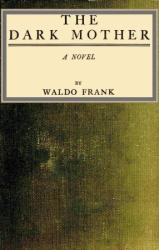
The Dark Mother (Boni & Liveright, 1920) is an early example— perhaps the definitive one—of a novel in which two men are in love, but in which the homosexual nature of the relationship is never revealed. In The New Republic (December 29, 1929), Stark Young wrote one of the few complimentary reviews of the novel, remarking,

One thing Mr. Frank does do: he brings home to us anew in this book the very valuable reminder that there are vast areas of life that our literature has not yet known how to include. In that sense this novel in places may be called a creditable experiment in material.

The two men in question here are nineteen-year-old David Markand and the somewhat older Thomas Rennard, who meet in a small town. Rennard is a visiting lawyer from New York, and Markand, following the death of his mother, is about to leave for New York to work for his uncle.
An intimate relationship develops between the two, and it is nurtured in New York when both men decide to share an apartment. Both have close female friends, and both lead semiseparate lives, coming together at night but sleeping in separate bedrooms. Rennard is very much obsessed with Markand who, in turn, does not understand the feelings that the other man has for him and gives an impression of naiveté.
When he first returns to the city, Rennard tells his artist sister Cornelia that he met somebody interesting on his vacation. When she asks was it the girl at last, he responds, “No—not the girl” (p. 50). Rennard attempts to explain his feelings to Markand by telling him the story of a man who loves his friend... 

Quote: The Dark Mother by Waldo Frank is not a gay novel per se. It is however an excellent example of a novel where the primary intense relationship is the friendship between two men. The relationship is so intense in fact, that it's easy to think the absence of physicality is just the prudishness of the time. Although the homosexual nature of the relationship is never mentioned, the reader can feel it's strong presence.

Thomas Rennard, a lawyer from New York meets David Markand while vacationing. Markand's mother has recently died and he plans to move to New York. After arriving in New York, an intense love triangle of sorts plays out among Markand, Thomas Rennard and his sister Cornelia.

In the following quote, really the heart of the novel, Rennard explains his feelings to Markand through a story. Afterwards, he immediately changes the subject as if he feels he has revealed too much.

There was a man ... who loved his friend. This man loved his friend and a woman came into his life whom he also loved. He asked for her in marriage, she gave her promise. So he went to his friend and told him. And the friend cried, 'Do not wed her. Remain with me!' And the man said: 'I love this woman but you are my friend. I remain with you.' He dismissed the woman whom he loved.
Now, thereafter, all was sorrow in the home of the man and his friend. One night as the man slept an angel came to him. The angel said: 'Thou who art so loyal to thy friend, name a wish and it is granted.' The man half-unknown to himself, cried out: 'Make a miracle! Make one my friend and my lover. Then I may be loyal and yet be happy.' The angel smiled. 'So it is already.' The angel disappeared.
... at once the man awoke. He found himself in his bed. He remembered the angel's visitation. He believed it. He ran to the sleeping chamber of his friend, expecting to behold a miracle. It was his friend, his unchanged friend who slept there. The man cursed and smote his breast. Then a great light came to him. He understood. He returned both loyal and happy.

Continue reading..

  The Western Shore
Posted by: WMASG - 12-07-2025, 11:25 AM - Replies (1)


The Western Shore (1925) is a novel by Clarkson Crane. Written while the author was living in a cramped Paris apartment, The Western Shore appeared at an exciting time of literary experimentation and achievement among American expatriates in Europe. Condemned for its realistic portrayal of campus life, featuring homosexual characters and sharp critiques of government and academic institutions, The Western Shore proved a costly gamble for Crane’s literary career. Although he would publish several more novels throughout his lifetime, Crane never achieved the recognition he deserved as a pioneering LGBTQ figure in American literature. Most novels of American college life focus on the nostalgia of the campus experience, the parties, friendships, and romances which accumulate to shape and change young lives, for better and for worse. In The Western Shore , Clarkson Crane refuses to look back on his undergraduate days with rose-tinted glasses, instead presenting a warts-and-all portrait of his diverse cast of characters. Milton Granger comes from a prominent family of intellectuals and academics. Carl Werner, a veteran of the First World War, struggles to obtain health benefits from the government he risked his life to serve. George Towne, a poor student and unrepentant cheater, tries not to flunk out of Berkeley for the third―and likely final―time. Perhaps most interesting of all is the lecturer Burton, an openly gay man who makes an impression on his students―Granger most of all. With a beautifully designed cover and professionally typeset manuscript, this edition of Clarkson Crane’s The Western Shore is a classic work of American literature reimagined for modern readers.

Continue reading..

  Temptation (1946)
Posted by: WMASG - 12-07-2025, 11:21 AM - Replies (1)


Now in a new translation, Temptation is a rediscovered masterwork of twentieth-century fiction, a Dickensian tale of a young man coming of age in Budapest between the wars.

Béla has never had much luck. His mother abandoned him at birth to go to work in Budapest, leaving him in the care of the dubious ‘Old Rozi’, a former prostitute who now runs a foster home with equal parts hauteur and cruelty. Victimised and almost starved by his guardian, Béla must fight for everything, from scraps of the other boys' food to the right to go to school. At fourteen he is caught trying to steal a pair of shoes; his mother is called and she reluctantly takes him with her to Budapest.

Once in the capital Béla manages to secure a position at a grand old hotel, and it is here that a more privileged lifestyle seems to extend a hand to him. Operating the lift, Béla encounters people from across Hungarian society and beyond, including the beautiful daughter of an American businessman and a passionate revolutionary. But his new lifestyle offers both pleasures and perils, and Béla must find a way to forge his own life from the divergent influences that surround him.

A picaresque classic with a rich vein of bawdy humour, Temptation is an under-appreciated masterpiece of twentieth-century fiction. Rich, varied and endlessly entertaining, the novel creates a stunning panorama of Hungarian society through the travails of its singularly charming hero. 


Continue reading..

  This Finer Shadow (1941)
Posted by: WMASG - 12-07-2025, 11:17 AM - Replies (1)


"This Finer Shadow" by Harlan Cozad McIntosh is a classic novel that delves into the complexities of human relationships and the mysteries of the human heart. Set in a quaint New England town, the story follows the lives of two families interconnected by love, loss, and secrets. McIntosh's eloquent prose and keen insight into the human condition make this novel a timeless exploration of family dynamics, guilt, and redemption. As the characters grapple with their pasts and navigate the challenges of the present, readers are drawn into a richly woven tapestry of emotions and revelations. "This Finer Shadow" is a compelling and thought-provoking read that will resonate with those who appreciate literary fiction that delves deep into the complexities of the human experience.

This Fine Shadow (Lorac Books, 1941) boasts a wordy text, in which much happens—some of it incomprehensible or at least inexplicable—at sea and in New York. In the words of Marianne Hauser in The New York Times (February 23, 1941), it “is centered around homosexuality, which is about the most difficult and also most precarious theme for a writer.” The hero, Martin Devaud, is a sailor who quits his ship in New York, is much too educated for such a lowly occupation, and is confused in both his sexuality and his liberalism.

Continue reading..

Online Users
There are currently 2 online users. 0 Member(s) | 2 Guest(s)

Welcome, Guest
You have to register before you can post on our site.

Username
  

Password


Search Forums

(Advanced Search)