Welcome Guest, Not a member yet? Create Account  


Forum Statistics

14 Members,   3,536 Topics,   10,207 Replies,   Latest Member is Stanley


  Winger's Landfall (1962)
Posted by: Frenuyum - 12-05-2025, 10:44 AM - Replies (1)


Below decks on a big liner an intense and curious life goes on. It is in no way like the orderly realm of the passengers. Noisy, sensual, crowded, the men and boys of the crew make their own world.
Harry Shears shipped on the Cyclamen for a reason. His job was that of a table steward—a winger—but his purpose was to find out what had happened to his young half-brother. Danny had disappeared overboard on a previous trip and nobody knew why. Suicide, presumably, but for what possible reason?
Very quickly, Harry is caught up in the life of the ship. It is a world without women and some of the men are glad to take the woman’s part. The rewards, in comfort, influence and flattered vanity, are immediate. The final result, when the “girl” is too old to play courtesan any more, is usually a life ruined beyond repair. In this strange, perverse half-world Harry Shears is immersed. He too could easily take part: in his own nature there is a strong vein of homosexuality. But he is repelled by the shrillness and self-deception of it all. For him affection and quietness are what matter, even in an affair between men. He cannot either enter or avoid the world of the queers.
Winger’s Landfall builds up a wonderfully strong and pungent image of this strange shipboard existence. In the echoing steel rooms and corridors different characters, forced into proximity, stand out in sharp and startling detail. The affections and conflicts that develop are sudden and violent. Through it all, the story of Harry Shears drives forward to its bitter, inescapable climax.

Continue reading..

  Tomorrow There Will Be Sun A Hope Prize Anthology
Posted by: Frenuyum - 12-05-2025, 10:29 AM - Replies (1)


STORY ONE:
The Hope Prize is an international short fiction competition – judged in 2024 by Dame Quentin Bryce, Julia Gillard and Tony Birch, among others – and all proceeds from the sale of its anthology are donated to a worthy organisation, this time Beyond Blue. Hope and resilience and bravery are themes, and the collection offers an eclectic range of stories, showcasing Australian authors amid their international counterparts. The standard is very high, with the bar set by the opening story, from Nigerian writer and queer liberation activist Ani Kayode Somtochukwu. "The Sorrow and the Pity" speculates on two teenage Igbo boys, survivors of the Biafran War, who face separation just as they discover their love for one another. It’s beautiful, cadenced, not a word out of place, and the hope is tenuous, suspended ethereally above darkness and violence. Mercifully, you won’t find a shred of unearned uplift or “toxic positivity” in this volume, and lovers or writers of short fiction should snap up a copy.

Quote: Prize-winning and highly commended stories from the 2024 Hope Prize, with judges including Dame Quentin Bryce, Dr Tony Birch and Julia Gillard.

‘Tomorrow There Will Be Sun is more than just a book, it is hope in your hands.’ Julia Gillard

The Hope Prize is one of the world’s leading short story competitions, and this collection of winning and shortlisted stories will delight, move and inspire you. From two lovers in Nigeria navigating uncertain futures; a homeless man in Melbourne holding fast to his dignity against the backdrop of an indifferent city; a former prisoner stepping back into the world; and a mother in Ireland who is unknowingly whisper-close to her long-lost son, these stories grapple with issues that define our time – mental health, poverty, war – in a way that feels both intimate and urgent.

In Tomorrow There Will Be Sun some of the world’s most promising literary voices remind us that no matter the challenges we face, through the strength of the human spirit and the power of connection, we can move through darkness and into the light. In a tapestry of unique perspectives, this engrossing and entertaining collection is a balm for the soul.

Hope isn't passive. It’s something we create, together. And in these pages, you’ll find hope well and truly alive, waiting for you to carry it forward.

All royalties from the anthology support Beyond Blue, Australia's leading mental health charity.

Continue reading..

  Yesterday Will Make You Cry
Posted by: Frenuyum - 12-05-2025, 10:25 AM - Replies (1)


'A stark depiction of the “alligator pond” of prison life … Rage tempered with compassion … [its] emotional core continues to smoulder’ The New York Times Book Review

Thrill-seeking teenager Jimmy Monroe is serving a twenty-year sentence for robbery in the state penitentiary, where terror and chaos reign, corrupt guards inflict casual violence, and men try to preserve their dignity amid isolation and inhumanity. When a fire breaks out, setting hell and mayhem loose, it seems Jimmy’s entire world is unravelling. But as he develops a tender relationship with fellow convict Rico, hope begins to glimmer, and, through his eventual foray into writing, something resembling redemption. Originally published in reduced and bowdlerized form in 1952, in an expurgated version, as "Cast the First Stone", "Yesterday Will Make You Cry" draws on Chester Himes’s own youthful experiences of imprisonment to face down the scouring truths of harm and love, and is presented in ebook form for the first time uncensored, and precisely as Himes wrote it.

‘Himes at the top of his game … what an amazing book it is’ Melvin Van Peebles

CHESTER HIMES began his writing career while serving in the Ohio State Penitentiary for armed robbery from 1929 to 1936. From his first novel, If He Hollers Let Him Go (1945), Himes dealt with the social and psychological repercussions of being black in a white-dominated society. Beginning in 1953, Himes moved to Europe, where he met and was strongly influenced by Richard Wright. It was in France that he began his best-known series of crime novels--including Cotton Comes to Harlem (1965)--featuring two Harlem policemen. As with Himes's earlier work, the series is characterized by violence and grisly, sardonic humor. He died in Spain in 1984. 

Quote: Praise for Chester Himes's Yesterday Will Make You Cry

"The book's strengths lie in Himes's unflinching ability to stare down terrible truths and his finely details portrayal of men in conditions of great adversity. . . . the novel's emotional core continues to smolder. Rage tempered with compassion is the backbone of this story--and what makes it eminently worth reading."
--The New York Times

"An illuminating sociological portrait of prison life--certainly one of the best available in fictional form--and adds another intriguing installment to Himes's fascinating oeuvre."
--Washington Post

"[Yesterday Will Make You Cry] is, most beautifully, a love story. . . . What a gift this is to American literature."
--Buffalo News

"Deeply engrossing. . . [A] clear-eyed tale about the brutality, physical and psychological, of prison life with a sensibility that turns agony into the poetry of pain and loss."
--Dallas Morning News

"[A] unique work and a fascinating one. . . . Himes has long deserved a serious reassessment, and this is a fine place to start."
--Boston Globe

"There could not be a fitter time or place for the publication of this great prison novel than today's United States."
--The Nation

"A textbook performance in which all of Himes's gifts come into play: the colorful characters, the ability to create a blunt reality without sacrificing an elegant style, and the trenchant commentary about blacks living in a society that is hostile ot them."
--Ishmael Reed

"Both a superior novel and a moving fictional record of the perseverance of humanity amidst unrelenting degradation."
--Publishers Weekly


Continue reading..

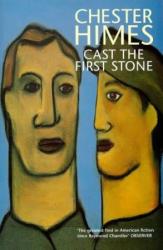
  Cast the First Stone (1952)
Posted by: Frenuyum - 12-05-2025, 10:21 AM - Replies (1)


Here is Chester Himes' great novel that rips aside the barred doors of prison life. An unforgettable story of what happens to a man in prison; a vivid re-creation of a perverse society with its own rules, its own taboos, its own virtues and grotesque vices.....

A classic restored -- the complete and unexpurgated text of the first, most powerful, and most autobiographical novel of this great African-American writer. In 1937 Chester Himes, newly released from a seven-year stretch in the Ohio State Penitentiary for grand larceny, finished his first novel, Yesterday Will Make You Cry. By turns brutal and lyrical and never less than totally honest, it tells the autobiographical story of young Jimmy Monroe's passage through the prison system, which tests the limits of his sanity, his capacity for suffering, and his definition of love. Stunningly candid about racism, homosexuality, and prison corruption, the book would take sixteen years and four subsequent revisions before being published in much altered form as "Cast the First Stone" in 1952. Even bowdlerized, it was recognized as a sardonic masterpiece of debasement and transfiguration.This edition presents for the first time the book precisely as Himes intended it to be read, with its raw honesty and startling compassion entirely intact. It now stands definitively as one of the great novels of prison life and one of Himes's most enduring literary achievements. 

Quote:
"Cast the First Stone" was published as Chester Himes' third novel. In fact, it was begun before both "If He Hollers Let Him Go" (1942) and "Lonely Crusade" (1947) but struggled to find a publisher.  What was eventually released by Coward McCann in 1952 barely resembles Himes' original manuscript, having been rewritten multiple times by the author and suffering through heavy editing and reordering by the publisher. An author in the vein of Richard Wright and James Baldwin, Himes left the US after this disappointing experience with the publishing industry.  He would relocate to Paris where he later gained success for a series of novels set in Harlem featuring two black police detectives, Gravedigger Jones and Coffin Ed Johnson. In 1998, Himes' original manuscript, under the original title, "Yesterday Will Make You Cry" was published by Norton, restoring an important literary work. 

Jim Monroe has just begun his sentence of twenty to twenty-five years for robbery. He's young, still a teenager really, and good looking. From the moment he sets foot in the prison, there is already competition to make him. There is an honesty about the existence of wolves and fags within the prison. It quickly becomes clear that everything in the prison is transactional; poker games, smokes, and sex.

As Jim becomes acclimated to his new environment, he begins to understand if he helps others, he’ll get something in return. While he was perceived as a prospective fag upon his arrival, he quickly gains capital by running poker games and occasionally fronting money to those in need. Others are willing to fag for him, should he want that. Over time, Jim's descriptions of other inmates becomes increasingly tinged with adjectives of beauty or a sense of attraction.

The bulk of novel is focused on the day-to-day activities of the prison; work assignments, meals, working around the rules, getting caught breaking the rules, being transferred to less desirable jobs and cell blocks for breaking the rules.

While the relationship between inmates and guards is always adversarial, there are examples of violence against inmates resulting in broken bones and even death. One prisoner dies of pneumonia while in the hole because the guards won’t allow him to see a doctor. During an escape attempt, prisoners from other wards brutalized or kill several guards in the process. When the prisoners are caught, punishment is swift. When a fire breaks out hundreds of inmates die while locked in their cells. Guards do little to save them and many inmates put themselves in danger to save others.

Jim longs for connection with others, but he rejects the constant conversation about sex with other inmates. Metz is the first inmate he meets that he has a true connection with. They talk about everything including religion and philosophy. It is in the aftermath of the fire however that Jim finally asks Mal, an inmate he met on his first day, to be his woman and kisses him. This traumatic event and his need for connection begin to change how he sees relationships. Later, an innocent friendship with Dido, a young inmate who is unsteady and quickly grows dependent on Jim, grabs the attention of the other inmates and the guards. Dido is devoted and would do anything for Jim. Their complicated relationship puts Jim's possible commutation at risk.

Told in the first person, "Cast the First Stone" reads like a pulp novel, with a focus on sensational themes. Hiding between the lines are glimpses of the true emotions of the characters but the focus is on the action of the story, not about how the characters feel about their situation.

Continue reading..

  At The Cross (1961)
Posted by: Frenuyum - 12-05-2025, 10:16 AM - Replies (1)


Jon, who is 16, but looks 14, has hitch-hiked to Sydney from Victoria. He is a young innocent abroad. The supposedly heterosexual couple who pick him up both try to seduce him and when he rejects their overtures he finds himself with no place to stay. Then he rooms with Cliff and Dennis, later finds other accommodation at the Cross (King's Cross), and eventually settles in with a middle-aged woman of dubious reputation. His various experiences are recounted with a dash of self-deprecation. He mixes in a very camp milieu, but Jon is never fully “out.” Yet even though Jon’s sexuality in At the Cross is equivocal, at the same time it is coy, perhaps too much so, a camp “in-joke.”
The novel reaches its dramatic zenith with the Gala Drag and Drain Party which is attended by a vast range of camp people dressed as characters such as Carmen Miranda, Peter Pan and Greek soldiers. It is a riot, in more ways than one, with a police raid and later court appearances.
The book may indeed be more memoir than novel, and therefore what is omitted is quite crucial for what these days might be expected to be revealed in a life story, but in 1961 homosexuality was still illegal in Australia, and discretion was imperative. However, in 1961 even what is not omitted was found morally repugnant to some. 

Quote: In this book Jon Rose bares his soul in a way that makes the reader almost ashamed to go on turning the pages. It becomes patently obvious that Rose and his associates were only fooling themselves that they were really living. Their contempt for decency and self-respect becomes pathetic. This is not a ruthless self-examination; it is petty exhibitionism. If, however, one is prepared to do a little literary slumming, the book is good entertainment (R.R. 1961).

Quote: Very rare book, "At The Cross (1961)" has been scanned and converted to retail quality ebook using ABBYYFineReader and Sigil.

Continue reading..

Online Users
There are currently 2 online users. 0 Member(s) | 2 Guest(s)

Welcome, Guest
You have to register before you can post on our site.

Username
  

Password


Search Forums

(Advanced Search)