Welcome Guest, Not a member yet? Create Account  


Forum Statistics

14 Members,   3,536 Topics,   10,207 Replies,   Latest Member is Stanley


  Born into crime, scarred by violence ... (March 2025)
Posted by: Frenuyum - 12-04-2025, 06:12 PM - Replies (1)


This is the against-all-odds story of Peter Norris, the son of one of Australia’s most wanted criminals, and his struggle to escape his father’s shadow.

Born into a life of crime, Peter’s earliest memories are shaped by the chaos of his father’s criminal exploits. Torn from home to home and running from heist to heist, his childhood was marked by violence, betrayal, and upheaval.

In this compelling memoir, Peter exposes the truth of his turbulent upbringing. As the youngest son of Clarence “Clarry” Norris, a notorious bank robber, Peter recounts the powerful love and loyalty that bound him to his father, creating a profound inner struggle between the allure of the underworld and the desire for normalcy.

Faced with a heart-wrenching decision at just 12 years old, Peter had to choose between following his father's criminal path or seizing a lifeline. The memoir moves from the underbelly of 1970s Sydney to the outskirts of Melbourne, highlighting a troubling chapter in Australian history when Peter and other innocent children were sent to abusive institutions.

Ultimately, Peter rises from the ruins of his troubled past, embarking on a remarkable journey of self-discovery and growth. He defies the odds to become a successful CEO, world-class athlete, and motivational speaker.

The Bank Robber’s Boy is the unfiltered account of innocence on the edge of law and a young boy’s unyielding determination to overcome his past.

‘Extraordinary, shows how one man can defy his destiny – not despite the odds, but because of them.'

‘A powerful testament to resilience, hope, and one man’s determination to break free from the shadows of his past.’

Continue reading..

  The Rise and Fall of Frank Arkell (March 2025)
Posted by: Frenuyum - 12-04-2025, 06:09 PM - Replies (1)


Frank Arkell (1929–1998) was the most successful politician of his generation; an Independent Member of Parliament [in NSW, Australia] who served as Wollongong’s Lord Mayor (1974–1991) and state member (1984–1991). Arkell dominated Wollongong public life with unstoppable energy, eccentric flair, and a single-minded determination to support the city through economic restructuring. Despite his popularity, at the edges of public consciousness there was growing disquiet over Arkell’s private life …

‘A compelling biography … Eklund provides a nuanced exploration of Arkell’s relentless efforts to transform Wollongong from a ‘steel city’ to the ‘Leisure Coast’, as well as his connections to an extensive paedophile network exposed during the 1997 Wood Royal Commission …’
— Associate Professor Jayne Persian, University of Southern Queensland

‘Eklund discloses the tragic consequences of unbridled male lust, deep social inequality and unaccountable class power … we have here a shocking story of sexual abuse and official corruption that brought untold suffering, political disgrace and, in the end, a brutal murder.’
­— Professor Frank Bongiorno AM, author of Dreamers and Schemers: The Political History of Australia

Continue reading..

  The true story of the Wollongong murders (2004)
Posted by: Frenuyum - 12-04-2025, 06:06 PM - Replies (1)


What would drive an 18-year-old youth to bash, dismember and mutilate the body of a former lord mayor of Wollongong? Mark Valera stuck tiepins into his victim's eyes and kicked and beat the corpse for several hours before discarding his own clothes for those of the dead man. Two weeks earlier, the body of a 60-year-old shopkeeper had been found in his suburban Wollongong home, his severed head left in the kitchen sink, satanic writings scrawled on the walls. Again, Valera's macabre handiwork.

Four months later, Valera walked into Wollongong police station and casually confessed to the murders. At his trial he pleaded childhood sexual abuse and family dysfunction as his defence. But the story didn't end there - in August 2000, Valera's father was murdered, dispatched by a tomahawk, knife and fire poker. This time it was Mark's 19-year-old sister Belinda who was behind the killing, although it was her lover, Keith Schreiber, who landed the blows.

This is a bizarre and chilling tale of blood lust, homophobia and manipulation. Focussing on the lives of the murdered and their murderers, John Suter Linton tracks the police investigations and uncovers the dark secrets of three young Australians and their insatiable desire for revenge.

Three victims and three perpetrators - all bound by blood.

Continue reading..

  No Past, No Present, No Future (2024)
Posted by: Frenuyum - 12-04-2025, 06:02 PM - Replies (1)


In his bold and pioneering novel, No Past, No Present, No Future, Yulisa Amadu Maddy explores the dynamics between three young boys as their lives slip quickly into chaos and tragedy. At a missionary school in colonial West Africa, three students from very different backgrounds forge a friendship in an effort to forget the difficulties they face at home. But when one of the boys betrays the other, a series of disastrous events spiral into out of control. After finally leaving school, their paths cross once again in Europe but prejudice and diverging loyalties put the brotherhood they once had into question. How can they ever dream of a future together when the ghosts of the past are determined to haunt their present?

Continue reading..

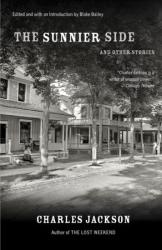
  The Sunnier Side and Other Stories (1950)
Posted by: Frenuyum - 12-04-2025, 05:59 PM - Replies (1)


A masterful collection of short stories exposing the seamy undercurrents of small-town American life from Charles Jackson, celebrated author of "The Lost Weekend". 
A selection of Jackson’s finest tales, The Sunnier Side and Other Stories explores the trials of adolescence in America during the tumultuous years of the early twentieth century. Set in the town of Arcadia in upstate New York, the stories in this collection address the unspoken issues—homosexuality, masturbation, alcoholism, to name a few—lurking just beneath the surface of the small-town ideal. 
The Sunnier Side showcases Jackson at the height of his storytelling powers, reaffirming his reputation as a boundary-pushing, irreverent writer years ahead of his time. 

Quote: I happened upon this 12-story collection by chance, noticing that a book-eating facebook friend had read it and was impressed. Charles Jackson is a name I mainly knew in connection with his 1940 autobiographical novel about alcoholism, 'The Lost Weekend' (which I haven't read) - made into an Oscar-winning film (which I've seen); somewhat infamous for excising the direct connection between Jackson's drinking and his inner conflict regarding his feelings for men. 

(Jackson would ultimately identify as bisexual - apparently maintaining good relations with his wife and daughters when he finally moved in with his male lover. Not that that made life any easier for him; he would return to being a slave to pills and alcohol. But it does seem to put him in wayward company with Patrick Dennis - minus the humor - and John Cheever - minus the infatuation with the upper-middle class.) 

Somewhat in 'response', perhaps, to works like Henry Bellamann's 'Kings Row' and Edgar Lee Masters' 'Spoon River Anthology', 'The Sunnier Side' puts smalltown-life under the microscope in order to highlight its underbelly. However, being set in the unique mentality of New York, its angst-level appears less chronic than Bellamann's Missouri, Masters' Illinois or even the New Hampshire of Grace Metalious' 'Peyton Place'. 

Still... there's something robotic - and even 'Stepford Wives' - running through Jackson's depiction of everyday folk. People in the town of Arcadia (standing in for where Jackson grew up) are clearly ruled by convention and 'What would people think?, or say?'

This is revealed in the opening story which gives the collection its title. The story opens with a fan letter from a reader praising 'Tenting Tonight' (included in the volume) as a "clean & delightful short story". The fan goes on to 'chastise' Jackson for how he writes elsewhere:

    it does sometimes seem a pity that a man with your gifts should dwell so much on the morbid & sordid, neglecting the sunnier side aforementioned & the wholesome.

Jackson's response to the letter is lengthy. He takes pains (with specific illustrations re: surface respectability) in respectfully pointing out that the fan's perspective on humanity is rose-tinted. It's an admirable and fascinating takedown. 

Seen as a whole, the remainder of the volume is a sequential overview of the years Jackson spent growing up in his family. The result is a bit myopic, as the emphasis (not always direct) is on things both sensual and sexual; the hold of existing in a physical form that we simply can't comprehend. 

That reality is brought most explosively forward in both 'Palm Sunday' (exhibiting the volume's best construction), in which Jackson and a sibling telepathically share the 'experience' they had with the town's choirmaster (why is it always the choirmaster?!) - and 'The Benighted Savage', which has Jackson's father, out of the gate, walking in on and becoming infuriated by his son's act of masturbation:

    "Don't you know what you're doing to yourself! You'll be stunted, finished, an idiot in the crazy house, with ruined health, dead! Feeble-minded, with tuberculosis of the spine or paresis or something!"

Fairly hilarious... and mind-boggling in its cluelessness. (It's no real surprise, later, when Dad ultimately - but mysteriously - disappears from the family.)

Jackson rises above himself when he effectively explores larger issues: the effect of WWI on the town and its two isolated German residents ('How War Came to Arcadia, N.Y.'); the sudden appearance of a sadly neglected / abused uncle ('A Night Visitor'); Jackson's love of language and the world of newspaper publishing ('Sophistication'); and the untimely death of an older sister ('Rachel's Summer'). 

Bottom line: These aren't bad stories. The writing is engaging and flows smoothly. In terms of what he actually published, the writer's output was meager. Jackson is decidedly but not all that justifiably obscure. He had talent - as well as overwhelming personal issues that perhaps only his biographer was able to illuminate. 

NOTE: I read the original publication; not the more-recent reissue, which substitutes a few stories for others.

Continue reading..

Online Users
There is currently 1 user online 0 Member(s) | 1 Guest(s)

Welcome, Guest
You have to register before you can post on our site.

Username
  

Password


Search Forums

(Advanced Search)