Welcome Guest, Not a member yet? Create Account  


Forum Statistics

14 Members,   3,536 Topics,   10,207 Replies,   Latest Member is Stanley


  The Brutal Truth Behind My Evil Father (2023)
Posted by: Frenuyum - 12-04-2025, 05:54 PM - Replies (1)


In "The Brutal Truth Behind My Evil Father," Daniel Weclaw bares the harrowing chapters of his true-life memoir, recounting the agonizing years of abuse endured in his childhood at the hands of his father. This gripping narrative unearths the haunting effects that cast a long shadow over his formative years, leaving scars both seen and unseen.

With unwavering candour, Daniel chronicles the tumultuous path he treads through the aftermath of this trauma, wrestling with the emotional turmoil that lingered. The legacy of his past cast its pall over his growth, weaving a narrative of struggle, resilience, and redemption.

"The Brutal Truth Behind My Evil Father" is a testament to the human spirit's capacity to endure and transcend. Fueled by an unyielding will to heal, Daniel embarked on a journey of self-discovery, seeking therapy, forging connections, and defying the silence that once held him captive. His memoir resonates as a beacon of strength, resonating with anyone who has faced their own darkness.

At the core of "The Brutal Truth Behind My Evil Father" lies the story of reclamation, as Daniel summoned the courage to confront his father and expose his hidden malevolence. Through relentless determination, he shattered the chains of silence and held him accountable for his actions, marking a profound triumph over adversity.

This memoir stands as an emblem of hope, proving that even in the face of the bleakest circumstances, the human spirit can emerge resilient and empowered.

Continue reading..

  A Dead Man in Deptford (1993)
Posted by: Frenuyum - 12-04-2025, 05:50 PM - Replies (1)


With "A Dead Man in Deptford", Burgess concluded his literary career to overwhelming acclaim for his re-creation of the Elizabethan poet Christopher Marlowe. In lavish, pitch-perfect, and supple, readable prose, Burgess matches his splendid Shakespeare novel, "Nothing Like the Sun". The whole world of Elizabethan England—from the intrigues of the courtroom, through the violent streets of London, to the glory of the theater—comes alive in this joyous celebration of the life of Christopher Marlowe, murdered in suspicious circumstances in a tavern brawl in Deptford more than four hundred years ago.

Continue reading..

  Jim - How I Shed My Skin (2015)
Posted by: Frenuyum - 12-04-2025, 05:27 PM - Replies (1)


"White people declared that the South would rise again. Black people raised one fist and chanted for black power. Somehow we negotiated a space between those poles and learned to sit in classrooms together . . . Lawyers, judges, adults declared that the days of separate schools were over, but we were the ones who took the next step. History gave us a piece of itself. We made of it what we could." —Jim Grimsley

More than sixty years ago, the Supreme Court ruled in Brown v. Board of Education that America’s schools could no longer be segregated by race.

Critically acclaimed novelist Jim Grimsley was eleven years old in 1966 when federally mandated integration of schools went into effect in the state and the school in his small eastern North Carolina town was first integrated. Until then, blacks and whites didn’t sit next to one another in a public space or eat in the same restaurants, and they certainly didn’t go to school together.

Going to one of the private schools that almost immediately sprang up was not an option for Jim: his family was too poor to pay tuition, and while they shared the community’s dismay over the mixing of the races, they had no choice but to be on the front lines of his school’s desegregation.

What he did not realize until he began to meet these new students was just how deeply ingrained his own prejudices were and how those prejudices had developed in him despite the fact that prior to starting sixth grade, he had actually never known any black people.

Now, more than forty years later, Grimsley looks back at that school and those times--remembering his own first real encounters with black children and their culture. The result is a narrative both true and deeply moving. Jim takes readers into those classrooms and onto the playing fields as, ever so tentatively, alliances were forged and friendships established. And looking back from today’s perspective, he examines how far we have really come.

“Does more to explain the South than anything I’ve read in a long, long time . . . Simply put, a brilliant book. While I was reading, I kept thinking two things. One, this is totally shocking. Two, it’s not at all shocking but a familiar part of my life and memory. Grimsley’s narrative is straightforward and plain spoken while at the same time achingly moving and intimately honest.” —Josephine Humphreys, author of No Where Else on Earth

“I not only believed this account but was grateful to see it on the record . . . The boy in this narrative is becoming a man in a time of enormous change, and his point of view is like a razor cutting through a callus. Painful and healing. Forthright and enormously engaging. This is a book to collect and share and treasure." —Dorothy Allison, author of Bastard Out of Carolina

“Jim Grimsley’s unflinching self-examination of his own boyhood racial prejudices during the era of school desegregation is one of the most compelling memoirs of recent years. Vivid, precise, and utterly honest, ?How I Shed My Skin is a time machine of sorts, a reminder that our past is every bit as complex as our present, and that broad cultural changes are often intimate, personal, and idiosyncratic.” —Dinty W. Moore, author of Between Panic and Desire

“In all his beautiful works, Jim Grimsley has told hard, hidden truths in luminous, subtle prose . . . Here, he renders history not on the grand, sociological scale where it is usually written, but on very personal terms, where it is lived. This is an exquisite, careful story of a white boy of simple background and great innocence.” —Moira Crone, author of The Not Yet

“Grimsley probes the past to discover what and how he learned about race, equality, and democracy . . . in this revelatory memoir.” —Kirkus Reviews

“Acclaimed writer Grimsley offers a beautifully written coming-of-age recollection from the era of racial desegregation.” —Booklist, starred review

Continue reading..

  The conclusion of the Nero and Sporus epic (2025)
Posted by: Frenuyum - 12-04-2025, 05:23 PM - Replies (1)


The conclusion of S.P. Somtow's award-winning epic set during the time of the Emperor Nero, based on the true story of a slave who ended up as Nero's empress.
The Emperor has returned to Rome after a triumphant tour of Greece in which he won all the major laurels at the Olympic games, even though he did not compete in an Olympiad year. Now he and Sporus must face conspiracy and downfall, and the boy-empress must navigate the treacherous currents of imperial politics when four Emperors compete for power in a single year.

Continue reading..

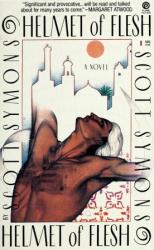
  Scott - Helmet of Flesh (1988)
Posted by: Frenuyum - 12-04-2025, 04:55 PM - Replies (1)


“AN EXTRAORDINARY ACHIEVEMENT!”
—Montreal Gazette

York Mackenzie is a man hungry in mind and body for self-liberation. Leaving behind his lover, John, and a past that included marriage and a forced separation from his beloved son, York flees to the heat of Morocco—and is swept into the press of warm bodies in the streets of Marrakesh, drawn to the boys dressed like birds of paradise. But it is the joyous and uninhibited Kebir who leads York into a world whirling with color, movement, deep pleasures, and fevered interludes. Dreams, fantasies, and realities soon become indistinguishable . . . his seductive odyssey takes him into an increasingly dangerous territory of flesh and soul . . . a hilarious motor trip with two British gays and a fateful decision to accompany a tantalizing stranger into a remote walled Kasbah leave York ready to make his life-wrenching choice. This rich, wildly exuberant epic of Eros regained is a feast for the senses, an evocation of ecstasy, an interweaving of emotions. HELMET OF FLESH is a grand achievement by an important literary voice. 

Quote: Hold onto your burnoose. Bernice. To open Helmet of Flesh is to embark on a roiling, rollicking camel ride. The latest from Canadian author Scott Symons has the protagonist careening through the Atlas Mountains of Morocco and ambling down the dank, pissy alleys of Marrakech led by sloe-eyed Arabian boys. Along the way he picks up a variety of gaudy and eccentric fellows. But for all its fun, there are some flaws.

To title this book with a gratuitous referral to a particular part of the male anatomy which has very little to do with the book is, if anything, misleading. Though sexual orientation is a fundamental aspect of the gay approach to life, it is our spirit which sets us apart from the greater society. Ironically, gay spirituality is one of the underlying themes of the misnamed Helmet.

While It does have its torrid moments, Helmet is simply a rather interesting story about York, a very uptight man, reclaiming his spirit and, thereby, giving vent to his bottled up emotional and physical selves.

My gripe about York (and this is just my opinion) is that he is such a weenie. From what I can tell, he is probably in his mid-thirties, bearded, comely (if not beautiful), and a somewhat astute observer of the world around him. That’s the end of my praise for him. Throughout the book. York is either tired, suffering from sun stroke, vomiting, or recovering from wounds. If he's not physically debilitated, he’s just plain dumbfounded. If ever a guy needed to be plopped into the topsyturvy world of Marrakesh, it's York.

Almost the minute this lump lands in Morocco, the fun begins - if not for him, at least for the reader. Immediately, York is enchanted by a young Arab named Kebir who remains loyal to him throughout the book. Fast on the heels of Kebir are two Englishmen: the inimitable Colonel Tony and a princely guy named James who always wears ascots.

Unbeknownst to York, the Colonel is really just a sergeant with a sad history and plenty of skeletons to be rattled. James, who claims to work “in communications", is a clerk in a telephone office. He is remarkable, though, in a number of ways — one being that even in the middle of the largest desert in the world, James is always able to come up with a few bottles of wine. The incredulous York asks. “Where does he keep them, in his shoes?"

York and Kebir are soon tooling through the Atlas Mountains with the extraordinary twosome in a large and luxurious Jaguar sedan. James is an avid photographer, his flash going off constantly, adding a fireworks effect to the already bizarre happenings. The Colonel is along because he likes to drive like a maniac and is looking to truly experience Arabian youth — again.

The band has a riotous time. They get hexed by the evil eye, almost run the Jag off the tortuous mountain roads, get mugged and robbed, and nearly get arrested when James vents his predilection for S/M action. When York last sees The Colonel and James, the Colonel is reeling out of a caravan tent with a seemingly mortal wound.

James is in an ecstatic trance, dancing like a dervish around a huge bonfire with some less than friendly tribesmen wielding knives. York, our hero, can’t take it — he passes out.

He awakens in "Le Tout Hotel Des Amis" (which is really an aviary of rare birds). He first meets the flamboyant Claude, a painter who has a penchant for capes and pantaloons. Then, there is Bertrand. The godly beautiful Bertrand lies around naked in a heroin reverie, his huge snake, raucous macaw. and flute near at hand.

All these characters (and there is a host I haven't mentioned) all seem to be exiles or on the run. Each becomes an icon of one meaning or another to York as he searches for himself. Helmet Is full of symbols and satire.

York (the messenger of Symons) is an astute observer. Through his eyes, the reader can really get a feel and flavor for that part of the world. What makes the descriptions so vivid is that York often falls into reverie over his home in Osprey Cove, Canada. The garishness of Marrakech jumps boldly out after a description of a rather straight-laced, quiet little fishing town.

York is also a diarist, writing everything down. And I mean everything - often in clipped, fast moving sentences which drop articles and conjunctions. The author, too, slips into this mode at times, especially when the action requires it. While I think this technique gives the book some punch and roll, others could find it irritating.

The serious reader should ignore the title and buy a book cover if he wants to read it on the bus. It‘s worth the trouble, for "Helmet of Flesh" is a book into which you can sink your teeth. It really is a very good read - often lyrical, often hilarious, often philosophical, often sensual. Symons has more or less resurrected the psychedelic, kaleidoscopic genre we saw during the late sixties and early seventies, though the focus is not on drugs but on the soul. The occasional blue cloud of hashish does wend its way through the plot but, after all, this is Morocco.

Continue reading..

Online Users
There are currently 2 online users. 0 Member(s) | 2 Guest(s)

Welcome, Guest
You have to register before you can post on our site.

Username
  

Password


Search Forums

(Advanced Search)