
Welcome Guest, Not a member yet? Create Account  


Forum Statistics

14 Members,   3,536 Topics,   10,207 Replies,   Latest Member is Stanley


  Parker - Pirate Slave (1977)
Posted by: WMASG - 12-15-2025, 07:18 PM - Replies (1)


“My name?” Sandy beat his chest with one fist. “Sandy. Alexander.”
Uri nodded. “Iskander,” he repeated, the Arabic pronunciation for Alexander.
So he was no longer Joseph Alexander Short, American boy. He was Skander, slave to Arabian pirates. Accepting his new name was a first step in his mind and heart toward admitting he was now a slave. Sandy, the cabin boy from the Essex, was dead—as surely as if his throat had been cut with a knife like his shipmates’. Skander now belonged to the pirate captain. He was never going home.
It was a harsh, primitive world into which young Skander had stepped, where piracy and slave trading were respectable ways of life. But the pirates were not unkind to him. They fed him well, better than he’d been fed aboard the American merchantman. They gave him a ragged shirt and taught him to dance and brushed his fair hair. They hoped to sell him for three thousand pieces of gold.
Instead, the harsh scar-faced captain relented and made a Muslim of Skander, and the boy chose to spend his life in this new world.
A true story of Salem ships in the early days he nineteenth century lies behind this colorful novel of an exotic part of the world. Readers will identify with Sandy-Skander as his eyes are opened to the cruelties that men everywhere inflict on one another in the name of slave trading. [From the jacket cover]

Continue reading..

  Unnatural Relations (1989)
Posted by: WMASG - 12-15-2025, 07:05 PM - Replies (1)


Fifteen year old Jamie Potten, bullied by his wealthy but belligerent father and unloved by his mother, is hopelessly in love with nineteen year old Christopher. In a chance meeting with the older boy Jamie found someone he could at last talk to, someone who listened and took an interest in him; over time Jamie's liking for Christopher turned to love, and when he finally acted on his impulses he was delighted to find that love reciprocated. However circumstances would conspire against them and lead to the older boy being arrested and tried on charges of buggery with a minor - this is England in the 1980s.

For Jamie Potten, burdened at fifteen with a bullying father and an uncaring mother, his encounter with nineteen-year-old Chris brings solace and joy. Chris’s love for Jamie, however, leads to his prosecution for 'buggery with a minor', with the threat of a heavy prison sentence.

In this gripping yet tender story of two young people facing together a brutal assault on their human rights, Mike Seabrook highlights the iniquitous position of gay teenagers under English law.

Continue reading..

  The White King (2005)
Posted by: WMASG - 12-15-2025, 06:48 PM - Replies (1)


Dragomán draws from his eastern bloc upbringing in this brutal, fragmentary novel.  Djata is an 11-year-old boy coming to grips with his father’s abduction and internment  at a forced labor camp. His mother, preyed upon by secret police officers and venal dignitaries, is powerless to save her husband, and Djata’s paternal grandfather, an unrepentant Party man, blames the internment on Djata’s mother as he spirals into alcoholism and madness. Meanwhile, Djata’s excursions in school, among his friends, at  sports and in the countryside, almost without fail, are exercises in nihilism and cruelty. Beaten and threatened by coaches, teachers, construction workers and even complete strangers, children absorb the violence and terror and re-enact it on one another. An unremitting terror drives most of Djata’s life, even when authority figures are not present. Dragomán conveys Djata’s fearful mental landscape with unadorned run-on sentences, skillfully building a totalitarian world simultaneously immersive and repulsive.

Continue reading..

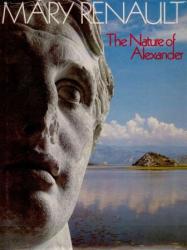
  The Nature of Alexander (Illustrated) (1975)
Posted by: WMASG - 12-15-2025, 06:36 PM - Replies (1)


When I discovered an ebook version of this book I was at first very happy, then disappointed it did not contain any illustrations (unlike my 1975 hardcover version). So I have spent the last 2 weeks scanning and updating all the 97 illustrations. With the advantage of the internet, I was able to source much better versions of the original illustrations in many instances. The great historical novelist, Mary Renault, was most famous for her Alexander the Great trilogy: Fire From Heaven, The Persian Boy, and Funeral Games, covering the short but glorious life of Alexander The Great. Renault was famous for her meticulous research, using the original writings of Arrian, Quintus Curtius, Plutarch, Diodorus Siculus and others to ensure her historical accuracy. The life and times of Alexander was her great writing cause, and Renault displayed an astonishing ability to understand the mind of and write about the gay male. This is extraordinary, given the author was both female and lesbian. There are few other examples of female writers with such perspicacity. If you have read The Alexander Trilogy, you will surely agree there is little doubt this is a book that is rightfully at home at TVM.

Quote: Alexander the Great, like his boyhood hero Achilles, traded long life for lasting fame. His fame has lasted—far longer than the knowledge of his world, which is needed to understand him. He has been seen by every age in terms of its own life style. Romance has wrapped him in fantasy. Propaganda has exploited him since the days of imperial Rome. He has been condemned for sins which to men of his time were merits; and credited with nineteenth-century virtues which his own culture despised. The aim of Mary Renault’s study has been to peel off from this complex and dynamic human being the accumulated layers of wishful thinking, both idealizing and ideological, and show him not in our terms but his: as he saw himself, and was seen by his friends, his enemies, the men he led and the peoples he conquered. Besides the statements of those who knew him in life, of which many fragments have been preserved, she has studied the folk memory, ‘which can be neither enforced nor bought’, handed down in the lands he ruled. She describes his youth spent between embattled parents, themselves sprung from royal houses under constant threat from usurpation and war; the ideals and ambitions urged on him by his teacher Aristotle; and the reactions he produced in those around him when his status was insecure and he had no means of rewarding loyalty. Mary Renault’s best-selling novels about Alexander, Fire from Heaven, The Persian Boy, and Funeral Games, have involved her in some years’ close study of his life. Crucial episodes which she has re-examined are the murder of his father Philip, in which he has been accused of complicity; the sack of Thebes; the death of his general Parmenion : and the wishes he expressed upon his deathbed. From a study of the medical evidence she has suggested important possibilities about Alexander’s death, and that of his lifelong friend Hephaestion. This hard-hitting, controversial biography, firmly based on the sources, challenges the ideological interpreters of Alexander, past and present, who have sought to wrench him out of the context of his era. The text is supported by carefully chosen illustrations, many of them specially commissioned, reproducing contemporary art, documents or reconstructions of events, and modern photographs of the territories Alexander covered in his travels.

Continue reading..

  The Gate of Eden (1974)
Posted by: WMASG - 12-15-2025, 06:32 PM - Replies (1)


There had been no suggestion of my returning at a later date; our parting at the garden gate had been cordial and impersonal, with the politeness of strangers, and yet, even then, I felt I knew him well, that I had always known him.
By the time I reached home I was in a black, depressed mood.
The shop was closed and my parents were already upstairs in the flat, having tea in front of the television set.
My grandmother was not feeling well that day and had gone to her room.
My mother quizzed me about where I had been.
“For a walk,” I replied shortly.
“You’re not eating your tea. Aren’t you hungry?”
“Not very.”
“I hope you’re not sickening for something.”
“I’m just not hungry.”
“All right, all right. There’s no need to snap.”
“Well, honestly!”
I knew that I was being bad-tempered and petty, but I couldn’t stop myself. I felt alone and isolated. I didn’t belong there, sitting in front of the television, with Dad reading the evening paper whilst my mother questioned and insinuated.
“It’s about time you got yourself a girl friend — nice little blonde — that’ll give you something to worry about!”
“You’d have a fit if he did!” said my father from the depths of his paper.
“I was only joking,” and she lit herself a cigarette.
“D’you remember Elsie Turnbull?”
“The one who married ... Jim Stephen’s sister?”
“That’s right. Says here she died in a car crash.”
“Good Lord. She was only. . . .”
And they were off! Miles away in the past, where I could not reach them.
Later I went up to my bedroom and sat in front of the gas fire. Although the evening was fine and the weather warm my room was always cold. It faced north over the back-lanes and if you craned your neck you could just glimpse a triangle of North Sea over the roofs.
For a while I sat, trying to read — but my mind kept returning to the old man and his dog and the house they lived in deep in the woods. I wondered what he was doing now. Perhaps he was reading one of his innumerable books, or listening to the radio.
Later my mother came up to see me.
“Are you all right? I’m sorry if I upset you. It was only a joke.”
I didn’t know what she was talking about. I was lost in thought.
“I met an old chap in the woods yesterday. . .”

Continue reading..

Online Users
There is currently 1 user online 0 Member(s) | 1 Guest(s)

Welcome, Guest
You have to register before you can post on our site.

Username
  

Password


Search Forums

(Advanced Search)