
Welcome Guest, Not a member yet? Create Account  


Forum Statistics

14 Members,   3,536 Topics,   10,207 Replies,   Latest Member is Stanley


  Peanut: the Story of a Boy (1913)
Posted by: Simon - 12-17-2025, 06:56 PM - Replies (1)


A tale of a little boy, Peanut (Philip Nutt), presumed an orphan, taken in and raised by Blazer Sam, an outlaw and his won-in-a-poker-game housekeeper known as The Rose of Texas.

Little Peanut's life is tranquil, if melancholy, since the death of Blazer, who was his close companion --during his infrequent visits back home-- on many adventures into the wood-lands surrounding their home near a coal mining camp. But since his death six years earlier, Peanut still misses him terribly, and visits his grave daily, when weather permits, to sit and talk to him, or just to lay upon the ground and sleep.

From time to time, the stage that passes through these parts will stop to let the horse-team rest, and some of the passengers will make the climb up the steep cliff to view the place where Blazer Sam is laid, where the simple wooden marker tells that he 'died with his boots on,' and has two cuss-words in his epitaph. Peanut abhors these visits, and hides in the bushes, watching to be sure no one moves Blazer's bones.

One such of these visitors, a Miss Cynthia Schofield, a teacher from Chicago, and presenter of certain illustrated evening lectures which she calls "In-Gatherings," had made the trek on this day, to find the young boy asleep on the grave. Little does Peanut know how radically his life --and outlook on the world-- is about to change...

Continue reading..

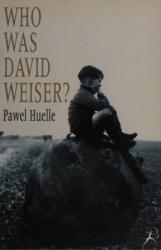
  Who Was David Weiser? (1987)
Posted by: Simon - 12-17-2025, 06:50 PM - Replies (1)


In the summer of 1957, in Gdańsk, four boys and one girl, classmates, run in the woods, run in the cemetery, play soccer, play war. In an abandoned brickworks they find unexploded ammunition left over from the Germans and Russians. And real guns. Their leader is David Weiser, a thin boy of few words, Jewish. Weiser doesn’t go to Sunday school, but he can hypnotize panthers, put a bullet hole through an Adolf Hitler stamp at a hundred meters, and levitate while Elka plays the panpipes. His classmates will never break the oath of secrecy, never tell the principal or the militiaman, or pompous, sadistic M-ski, the nature teacher, or the stern, censer-swinging Father Dudak, what really happened in the hollow behind the firing range. 
   
Quote: A novelist and author of a volume of verse, born in Gdańsk in 1957, Huelle is a graduate in Polish of the Gdańsk University, and has also worked in that city as an employee of the ‘Solidarity’ press office, university lecturer, journalist, director of the Gdańsk Polish Television Center and, most recently, as a columnist for Gazeta Wyborcza. Huelle has found enormous success as a writer and been honoured with many prestigious awards.

His work, rich in themes and form, is always connected with Gdańsk — a ‘small homeland’. The distinguishing features of this prose include, on the one hand, the epic panache and attention to detail, and, on the other hand, the erudite nature, the tendency to pastiche and play with conventions, to enter into dialogue with the works of other writers. This can already be seen in the first novel, Who Was David Weiser? (1987) — a book that refers to Günter Grass’s Cat and Mouse, but is also an original creation of the Polish author. Who Was David Weiser?, hailed as the most important debut of the decade and awarded the Kościelski Prize (1988), is still considered Huelle’s greatest achievement so far. The book has been translated into many languages, and also boasts a film adaptation — in 2000, Wojciech Marczewski directed the film Weiser.

In the 1990s, Huelle published Moving House and Other Stories (1991), Wiersze (Poems; 1994) and Pierwsza Miłość i Inne Opowiadania (First Love and Other Stories; 1996; for this book he was nominated for the Nike Award) and Other Stories (1999; a collection of editorials and essays published in Gazeta Wyborcza).

In his short stories, as in Who Was David Weiser?, the writer mythologises his homeland — Gdańsk and the Baltic Coast. And just like in his debut novel, the world of boyish experiences, recalled in the memories of an adult, plays an important role. The book is covered with overlapping time perspectives, the accompanying oneirism and the aura of understatement.

In 2001, Huelle’s second novel was published — Mercedes-Benz: from Letters to Hrabal. The book is a tribute to the Czech master, Bohumil Hrabal — firstly, as the title suggests, it takes the form of a letter to ‘beloved Mr Bohumil’. Secondly, both the plot and the language are Hrabalean. The story takes place in Gdańsk at the beginning of the 1990s. The protagonist, a writer, takes a driving licence course, not doing very well behind the wheel. To divert the attention of the beautiful instructor, Miss Ciwle, from his mistakes, he tells her about the cars of his grandparents — inspired, as he openly admits, by an idea from Hrabal’s novel.

Similarly, ‘inspired by an automotive daimon’, in dizzyingly long, often complex, truly Hrabal-like sentences, Huelle tells amusing anecdotes in Mercedes-Benz — about his grandmother’s Citroën crushed by a hasty Vilnius–Baranovichi–Lviv train, or about his grandfather’s Mercedes-Benz, seized by the Red Army for Nikita Khrushchev. As it turns out, telling these sparkling humorous stories from the past has a therapeutic meaning: neither the student’s nor his instructor’s life is happy (they both have seriously ill siblings, and she lives in poverty). Mercedes-Benz was awarded the Polityka Passport Award (2001). However, the book divided critics and readers. The mastery of form, lightness and wit were admired, but there were doubts as to the imitative character of the work.

His novel Castorp (2004) is a part of Borges’ ‘idea of a great library’. Like Mercedes-Benz, it is literature made of literature, a tribute paid this time to Tomasz Mann’s The Magic Mountain. Mann’s book contains laconic information about the fact that the hero, Hans Castorp, before he came to the sanatorium in Davos, studied at the Gdańsk University of Technology for four semesters. This inspired Huelle to create a kind of prequel of the German masterpiece. We get to know the story of young Hans, who at the beginning of the twentieth century sailed from Hamburg to Gdańsk by ship. Here, he falls in love with the beautiful Polish woman Wanda Pilecka (a prefiguration of the Russian Madame Chauchat from The Magic Mountain) and experiences a spiritual crisis in the fight backed by Schopenhauer’s philosophy. The background to the story, perhaps more important than its protagonists, is Gdańsk, Wrzeszcz and Sopot, described with care and tenderness.

Castorp can be read as a variation on the theme of The Magic Mountain, addressing some of its themes and problems (such as the attitude of the Germans towards the East). Huelle’s book can also be regarded as the next link in the chain of works creating the mythology of Gdańsk. For the writer, the work on this novel was an exercise in his imagination, a composition on a theme he had set himself as he said in an interview with Sebastian Łupak (Gazeta Trójmiasto, 17.05.2004).

If, however, some feared that Huelle would stop at such composition exercises, the next novel proved that he could still do much better. A sharp satire on contemporary Poland and at the same time a work with philosophical ambitions, The Last Supper (2007) aroused heated discussions among critics. The plot of the novel refers to the idea of Maciej Świeszewski, professor at the Gdańsk Academy of Fine Arts, who became famous a few years ago when he painted a large-format painting entitled The Last Supper, portraying well-known figures of the Tri-City as apostles. In Huelle’s book, Mateusz, an artist belonging to the ‘metaphysicians’ trend, realises the same concept by asking his old friends to become Christ’s disciples during a photoshoot in the theatre.

After The Last Supper, nominated for the Nike Award, Huelle published the Cold Sea Stories (2008). In this collection of short stories, the author looks back to the past, following the human fate associated with Pomerania; he also returns to a calm, elegant narrative and focuses on existential and metaphysical issues. The question has arisen as to what Huelle’s next book will be like. Some asked if a melancholic, nostalgic tone will prevail, as in his short stories, or rather a satirical twist visible in the last novel? Or maybe the writer will surprise his readers with something radically new? Certainly, his talent, supported by erudition, always raises high expectations.

These expectations were faced in his next novel, Śpiewaj Ogrody (Sing Gardens; 2014), the title of which was taken from a poem by Rainer Maria Rilke, the beloved poet of Paweł Huelle. The book is another tribute to Gdańsk, to music and to a woman. It is a multi-faceted story permeated with autobiographical motifs, a memory of Gdańsk as a melting pot of cultures, a fascination with Wagner and a legend about a flautist from Hameln.

Continue reading..

Question Fire From the Sky (2023)
Posted by: Simon - 12-17-2025, 06:46 PM - Replies (1)

Ánte’s life has been steeped in Sami tradition. It is indisputable to him that he, an only child, will keep working with the reindeer. But there is something else too, something tugging at him. His feelings for his best friend Erik have changed, grown into something bigger. What would people say if they knew? And how does Erik feel? And Erik’s voice just the push of a button away. Ánte couldn’t answer, could he? But how could he ignore it? Fire From the Sky is a sharp and intelligent story about heritage, family ties and age-old commitments to the past. But also about expectations, compassion, feelings that course through your body like electricity.

Quote:A Sámi teen wrestles with his sexuality amid tradition and homophobia in this novel translated from Swedish and set in an Indigenous Arctic community.

Reindeer are everything to 16-year-old Ánte, who carries on his village’s traditions with honor. That is, until Ánte realizes that his entire body trembles at the sight of his friend Erik’s eyes. Soon, everything becomes about Erik—who, unfortunately, has a girlfriend. As confusion swirls within, Ánte explores an internet message board, finding a thread entitled, “Do homosexual reindeer herders exist?” Overheard conversations (including a few involving his father) reveal the community’s deeply embedded homophobia, contributing to Ánte’s own internalized homophobia. Leaving the village is not an option, but what if his feelings never go away? Why should Ánte have to choose in the first place? Despite the looming shadow of canonical queer tragedies in pastoral settings, debut Sámi author Åstot delicately manages to simultaneously honor tradition and push against it. The result is a rare and triumphant look at what it means for queerness to stay put, with all the messiness and pain that entails. The time-stopping emphasis on gazing and longing results in romantic tension that nearly rivals period romances, yet the story is anchored in the present. Sámi words and phrases and rich descriptions make for an immersive read. Though Ánte’s queerness is isolated, an adult gay Sámi’s reappearance hints at queer community.A fresh voice and a setting that’s pure fire.

Continue reading..

  Beautiful Beautiful (2023)
Posted by: Simon - 12-17-2025, 06:42 PM - Replies (1)


Imbued with passion, creativity and insight, Brandon Reid’s debut novel is a wonderfully creative coming-of-age story exploring indigeneity, masculinity and cultural tradition.

Twelve-year-old Derik Mormin travels with his father and a family friend to Bella Bella for his grandfather’s funeral. Along the way, he uncovers the traumatic history of his ancestors, considers his relationship to masculinity and explores the contrast between rural and urban lifestyles in hopes of reconciling the seemingly unreconcilable, the beauty of each the Indigenous and “Western” way of life ― hence beautiful beautiful.

He travails a storm, meets long-lost relatives, discovers his ancestral homeland; he suffers through catching fish, gains and loses companions, learns to heal trauma. In Beautiful Beautiful we delve into the mind of a gifted boy who struggles to find his role and persona through elusive circumstance, and ―

All right, that’s quite enough third-person pandering; you’re not fooling anyone. Redbird here, Derik’s babysitter, and narrator of this here story. Make sure to smash that like button. We’re here to bring light to an otherwise grave subject, friends. It’s only natural to laugh while crying. I bring story to life. One minute I’m a songbird singing from a bough, the next, I’m rapture. I connect you to the realm of spirit… Well, as best I can, given your mundane allocation.

Follow us through primordial visions, dance with a cannibal (don’t worry, they’re friendly once tamed) and discover what it takes to be united. Together, we’ll have fun. Together, we are one. So tuck in, and believe what you’ll believe, for who knows what yesterday brings. Amen and all my relations, all my relations and amen. 

Beautiful Beautiful is a fitting title for Brandon Reid's novel, for it describes the work itself ― it's simply beautiful. Reid manages to capture hypnotic traditional storytelling in written form ― by stretching, manipulating and breaking traditional rules and conventions of the English language. Reid draws us into the tormentous but stunning world of a boy who, while young in years, is an ancient soul. Through brilliant description, mind-blowing shifting of perspective and a brilliant use of the boy's internal voice, we join the daily toils of a Heiltsuk family as they struggle to live off the capricious bounty of the Pacific Ocean. Like Omar El Akkad’s What Strange Paradise, Beautiful Beautiful stakes out new ground in the literary scene.

Continue reading..

  Lutz van - Verdammt starke Liebe (2014)
Posted by: Simon - 12-17-2025, 06:39 PM - Replies (1)


Stefan ist vierzehn, als sich mit dem Überfall Deutschlands auf Polen im Sommer 1939 sein Leben über Nacht ändert. Er, der immer ein guter Schüler war, darf nun nicht mehr die Schule besuchen, sein Vater wird als Zwangsarbeiter nach Deutschland deportiert. Bald geht es für ihn und seine Familie nur noch ums Überleben. Zwei Jahre später lernt er Willi kennen, einen jungen deutschen Soldaten. Für beide ist es Liebe auf den ersten Blick – doch Liebe zwischen Männern verfolgen die Nazis streng. Trotz der ungeheuren Gefahr, die eine Beziehung für sie beide bedeutet, gehen sie das Wagnis ein. Nach einigen Monaten des heimlichen Glücks wird Willi an die Ostfront versetzt. Stefan ist verzweifelt. Als er über Wochen keine Nachricht von Willi erhält, schreibt er ihm einen verhängnisvollen Brief. Wenig später wird er verhaftet, gefoltert und zu fünf Jahren Haft verurteilt. Wird er überleben? Und was ist aus Willi geworden? 

When the Nazis overran Poland in the fall of 1939, fifteen-year-old Stefan K.'s father was sent off to a German labor camp. Now, in the tense days of occupation, Stefan scrambles to help take care of his family. Yet when his brother, Mikolai, takes him out after curfew to celebrate his sixteenth birthday, Stefan makes a life-changing discovery: he yearns for men the way his brother does for women. As he juggles his time between his day job at a bakery and his evening work in the theater, Stefan becomes more aware of his desires. And then he meets Willi, his one true love. 
Everything about Stefan's love affair with Willi is damned. They are both men. Willi is an Austrian airman, a Nazi soldier. Stefan's brother is actively fighting the Germans in the Polish Resistance. Yet Stefan and Willi's love sees no boundaries of nation, race, or gender. It is too strong to deny. And too passionate to survive. When the Gestapo discovers their affair, not only their love but their lives are in great danger. 
Based on the true story of Stefan K., who has written a letter to readers at the end of the book Damned Strong Love is a novel that shows the power and importance of love even as it describes the terrible price of intolerance and hatred. Stefan and Willi's love was damned, but it was strong; Lutz van Dijk's powerful and humane novel is their legacy.

Continue reading..

Online Users
There are currently 2 online users. 0 Member(s) | 2 Guest(s)

Welcome, Guest
You have to register before you can post on our site.

Username
  

Password


Search Forums

(Advanced Search)